|
»
Power zones of cardio: endurance, fat burning, or recovery?
Author: Novikova Diana - triathlon coach. All articles by the author ➤
During aerobic workouts, the body continuously uses energy from muscle glycogen and fat stored in the body. The main goal of training is to teach the body to obtain and utilize this energy as efficiently as possible with minimal loss. Knowledge about this will help regulate the load in terms of frequency, duration, and intensity to achieve the best results. To determine the level of intensity, the concept of “ANA” is used. This is the anaerobic threshold at which the accumulation of lactic acid occurs faster than the body can eliminate it. As a result, you cannot sustain this load for a long time and are forced to stop exercising. There are a total of 6 zones: 1. Zones 1-4 (aerobic): In these zones, the body uses oxygen sufficiently to oxidize molecules and convert them into energy. 2. Zones 5-6 (anaerobic): Above the anaerobic threshold, it becomes impossible to stay in these zones for long; energy will run out, and you won’t have the strength to maintain the same power output. This corresponds to about 75% of the maximum heart rate (MHR), which is calculated using the following formulas:
Zone 1 - Recovery(~ 120-135 beats per minute) This zone helps to recover after heavy loads. It is most often used between intervals, for example, during running or swimming. Because the heart rate is higher than usual, the body can more quickly deal with waste products and deliver nutrients to the cells. For novice athletes, complete rest may be more effective than continuing to exercise, even at minimal intensity; this should be determined based on your feelings and sensations. Zone 2 - Extensive Endurance(~ 135-145 beats per minute) In this zone, prolonged training takes place aimed at improving endurance. Slowly contracting muscle fibers become stronger, and lactic acid accumulates too slowly to cause fatigue. This zone helps develop the ability to use oxygen for energy production, utilizing both glycogen and glucose. For competition preparation where endurance is required, it is recommended to spend most of the time in this zone. Zone 3 - Intense Endurance(~ 145-160 beats per minute) This is a transitional zone between extensive endurance and more intense interval workouts. It is mainly applied at the beginning of preparation for competitions or to adapt to more intense loads. In general training plans, this zone is rarely used since it involves fast muscle fibers alongside slow fibers, leading to the formation of lactic acid and fatigue during training, but insufficiently to develop speed and strength skills effectively. Zone 4 - Intensity Threshold(~ 160-170 beats per minute) This is working in the anaerobic threshold zone, where the body adapts to lactate production and accelerates the process of disposing of waste products. It's impossible to stay in this zone for long; typically, intervals at the anaerobic threshold last a few minutes, followed by a recovery period. There are people who manage to complete serious competitions, like half-marathons, at this load level, but this puts serious stress on the body and requires lengthy recovery. There are cases where overdoing it for just a few hours can set your fitness level back by several months. Zone 5 - Anaerobic Endurance(~ 170-175 beats per minute) In this zone, the intensity is even higher. It’s not advisable to push yourself too hard with this type of training, as it is the most common cause of overtraining. Simply increasing volume rarely leads to positive outcomes. Recovery after workouts in this zone is necessary during the workout and for several days afterward. The proportion of fast-twitch muscle fibers is even higher in this case. Zone 6 - Power(~ over 175 beats per minute) These are short explosive intervals at the maximum possible pace at the limit of your efforts. Working in this zone trains accelerations, helps increase muscle mass, and develops fast-twitch fibers. When preparing for long competitions like marathons, the proportion of this zone should be minimal. The first way to determine your intensity zone is subjective, based on perceived effort, determined using the Borg scale: 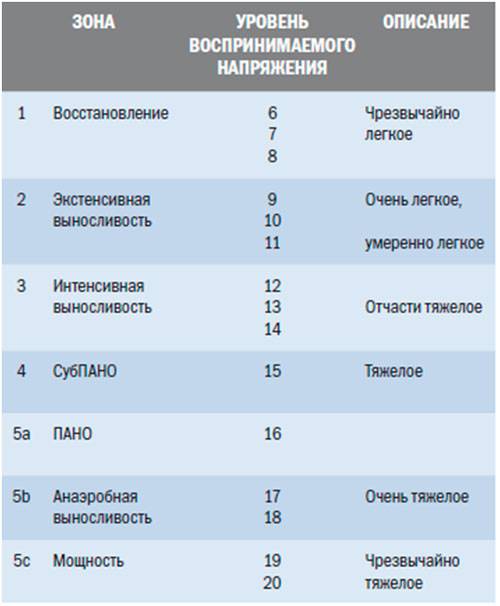
Another method is an approximate calculation based on your pulse, depending on your age. 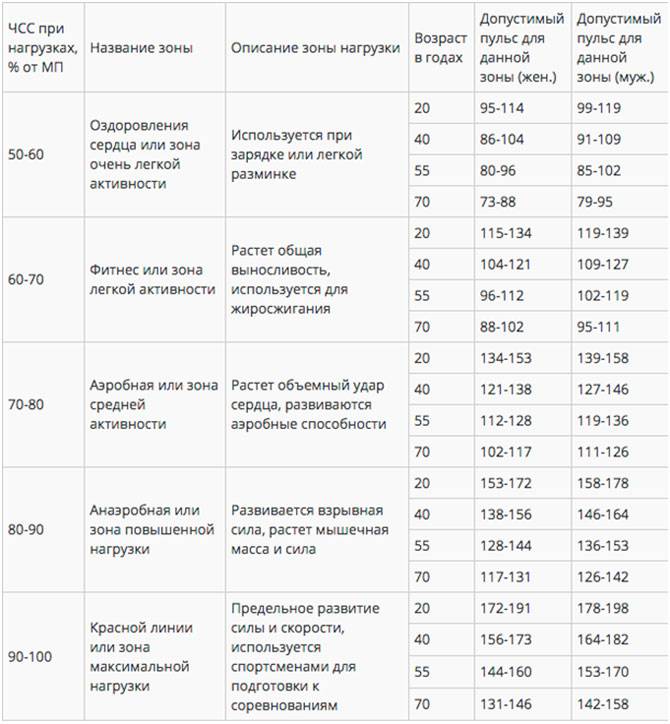
Conclusions1. It is necessary to use different heart rate zones in training to vary the load and prevent the body from adapting to monotonous workouts. This applies to all sports. 2. For fat burning, the second zone is the most effective, but it is also recommended to use interval training. 3. The volume of workouts in each zone should consider your goals. If the goal is to improve times on short intervals, the intensity should be higher, and the duration of the exercise should be shorter. However, if you are preparing for a marathon, 90% of your training should occur in zones significantly below the anaerobic threshold. 4. The longer the distance you are preparing for, the lower the average heart rate during training should be. SIMILAR ARTICLES
COMMENTS |