|
»
Stretching: at-home stretching
Author: Mikhail Ziborov - author of the site makefitness.pro. All articles by the author ➤
Do you know why gymnasts are so muscular and flexible? Because they work out and stretch. And while everyone reading these lines may be exercising, not everyone stretches. Do you want to know the benefits of stretching and what advantages or disadvantages you might gain? Then read the material to the end. In English, "Stretch" means to stretch. Therefore, "Stretching" refers to the process of stretching. What Stretching Can Offer
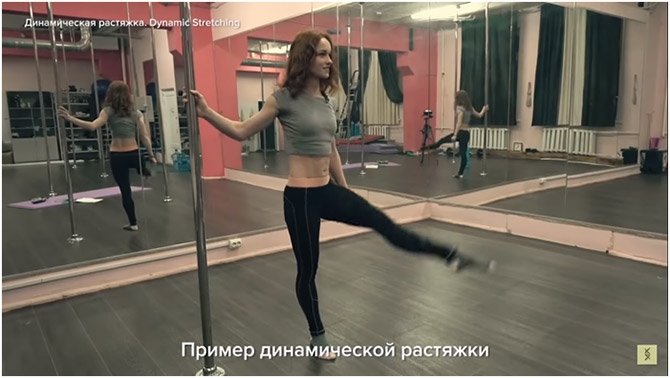
Typically, people stretch for the following reasons: All of this can be achieved through stretching, which can be done independently or combined with other workouts, including weight loss programs for women or for men. However, not all stretching is the same. Here’s why. Types of StretchingDynamic Stretching. This is called "stretching" only on paper. In reality, it's about dynamic exercises: swings, bounces, circular movements, and so on. If an exercise does not hold a stretch for several seconds, it’s not stretching. This type of stretching helps warm up and prepare the muscles and joints for activity, but it won’t provide a full stretch. Yes, flexibility can improve to some extent, but not as much as many would hope.
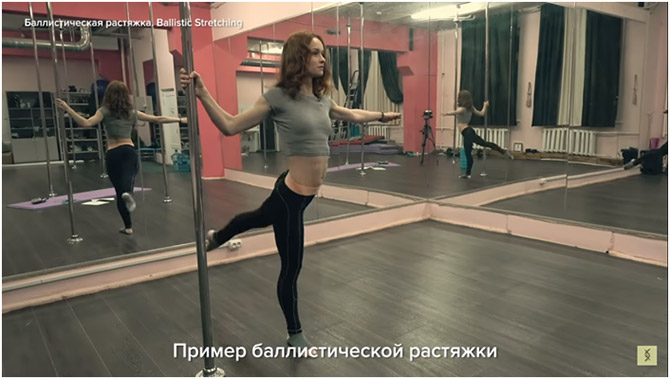
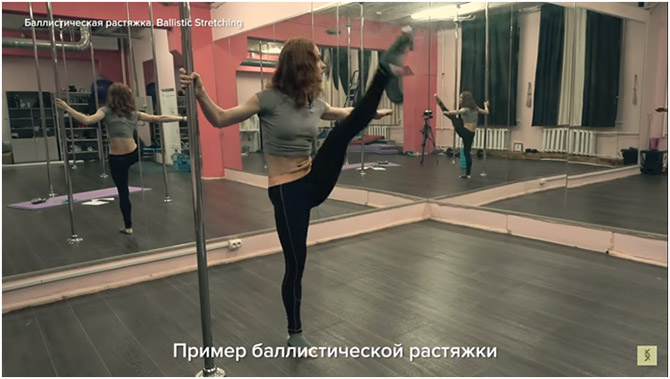
Ballistic Stretching. This is a subtype of dynamic stretching but with a greater range of motion. For instance, you swing your leg with such force that it moves by inertia further than you could raise it on your own. It is effective but poses a risk of injury—in moderation, it’s fine.
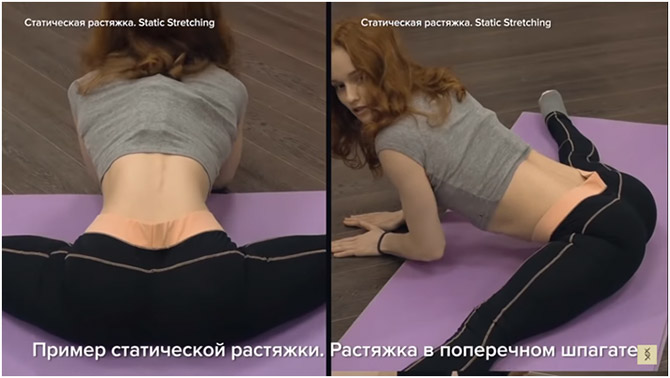
Static Stretching. You take a specific position and hold it for a certain period, say, 15-30 seconds. This is a very effective way to achieve your goals, but it can be unpleasant and risky for those who don’t know their limits and chase quick results.
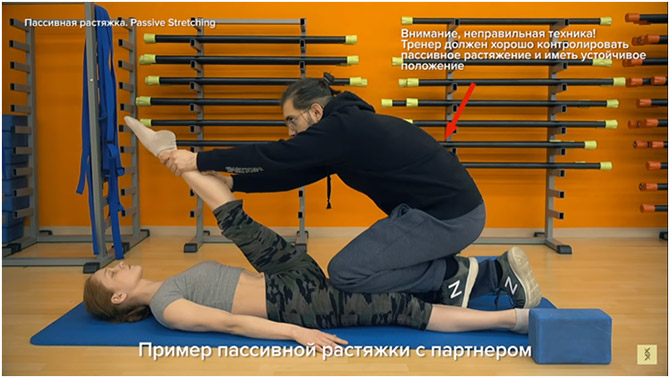
Passive Stretching. Very similar to the previous type, but the main difference is the application of force: your own, when you do a "butterfly" and push your knees down with your hands, a partner who applies pressure, or the force of gravity when a weight is pushing down on you. The downside of passive stretching is that you may not be able to stretch as much (for example, lifting your leg) as the weight, partner, or the force of your supportive limbs allow you.
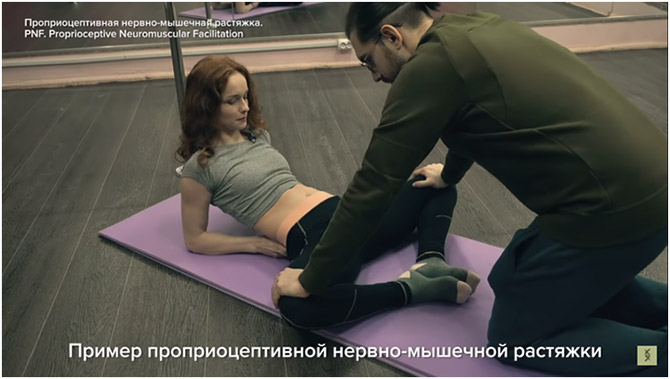
Proprioceptive Neuromuscular Stretching. This is a blend of dynamic and passive stretching. In the first phase, your partner applies pressure to you, and you resist it by tensing your muscles (not allowing yourself to drop into the lowest point). This is maintained for a period. The second phase involves you relaxing your resistance to your partner’s pressure, allowing them to bring you to the lowest point (the maximum stretch). This type is intended for toning the musculoskeletal system, improving flexibility, and primarily relaxing already worked muscles.
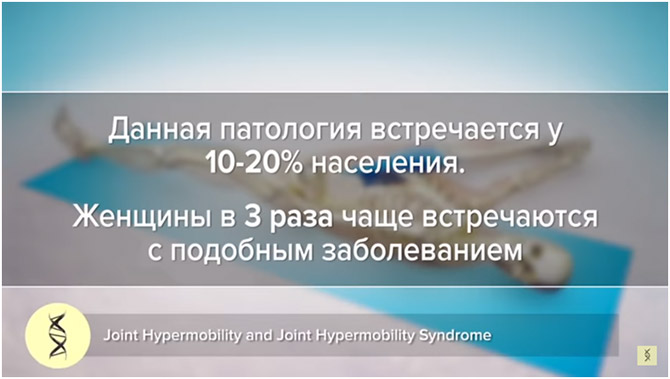
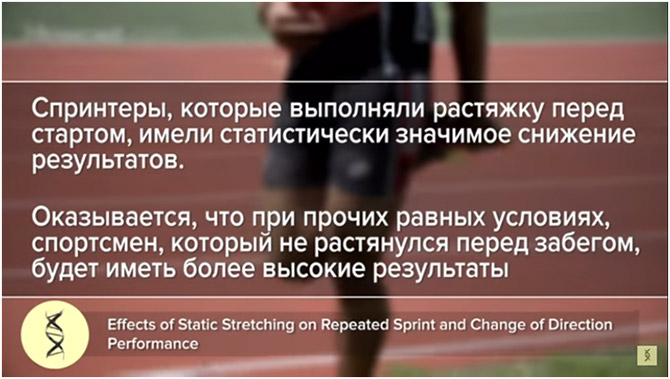
Stretching types include dynamic and static stretches, which we’ve already discussed. All types (except dynamic stretching, which is nominally considered stretching) should not be used during warm-up, as this risks injury (sprains, tears, etc.) because the muscles aren't prepared for such loads when they are "cold." Moreover, it has been proven that stretching (not dynamic, but static) before training can worsen performance during workouts—reducing strength and endurance. Therefore, stretching is the prerogative of the final part of workouts, i.e., the cooldown, not the warm-up. In the photos, you see Veronika Ris—stretching and Pole Dance instructor. Which Type of Stretching to Choose?To be honest, there is no real difference in terms of increasing flexibility among the various types of stretching. Yes, one type helps you relax, while another allows you to achieve the splits more quickly, and the sensations differ across types. However, you can achieve the splits with any type. Studies like "Chronic Effect of Different Types of Stretching on Ankle Dorsiflexion Range of Motion: Systematic Review and Meta-Analysis" indicate that there is little evidence to suggest a significant difference in flexibility increase. If you can’t stand the pain, try proprioceptive stretching. What You Need to Know About StretchingContrary to popular belief, the entire muscle-tendon complex (muscles and tendons) stretches. However, the degree of stretch differs: tendons stretch poorly due to their strength and structure (they can stretch up to about 5.5%), whereas muscles, because of their elasticity, softness, and resilience, can stretch nearly 23%. BUT! If you think that stretching your muscles makes them longer, you are mistaken: the muscles revert to their original state. So what changes? What changes is the way our brain perceives tension: as we adapt, it no longer perceives the stretching that previously caused discomfort and pain as unpleasant. In simple terms, by stretching our muscles, we become accustomed to the tension, gradually increasing our flexibility, but the muscles do not actually become longer. This phenomenon is called the "Sensory Theory of Stretching." You can learn more about it in Boris Tsatsulin’s video "Stretching and Flexibility: Muscles, Tendons, and Ligaments." Who Should Consider Stretching?Not everyone needs stretching. If you are stretching at home (without a trainer) and want to stay healthy, first test yourself for hypermobility of the joints. What it is, what risks it poses during stretching, and how to test yourself can be learned on your own.
Those who suffer injuries should stretch carefully. In all other cases, stretching is fine. When Should You Stretch? It’s best to stretch after a workout, but you can also do it after a good warm-up. By the way, you don’t need to do exercises or attack the treadmill/cycle ergometer; it’s enough to take a warm bath or apply heat to the area you’re going to stretch. Research from 2001 titled "Effect of Superficial Heat, Deep Heat and Active Exercise Warm-up on the Extensibility of the Plantar Flexors" shows that heat helps to prevent injury and improves the stretching of muscles and tendons.
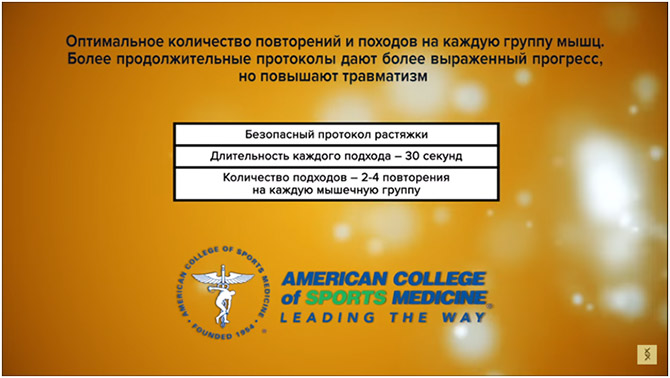
So it’s better to stretch after: If it’s about the time of day, stretching before bed reduces nighttime (myoclonic) cramps and leads to relaxation of the nervous system (i.e., you’ll sleep better). What Should Be the Duration of Stretching?One approach, i.e., one period of stretching, should not exceed the 30-second barrier because prolonged stretching can lead to decreased physical quality results.
As for the overall duration, stretch all the muscles that were previously worked, in one or multiple approaches (these are completely different time frames). The optimal number of approaches is 2-4 (more will not offer any benefits).
How Often Can You Stretch?For minimal results in flexibility, you should stretch 2-3 times a week (not counting those short cooldown stretches after strength training). Naturally, you can stretch every day—it will only improve your results. What Should You Avoid When Stretching?- Do not bounce! This can lead to injury; - Do not stretch to the point of sharp pain (don’t endure it): you should feel the stretch in your muscles, not pain. If you want to stretch properly, here is a stretching video:
Additional sources of information on stretching for beginners. Also, take a look at two videos on YouTube (the third was mentioned earlier): - "Top 8 Scary Myths About Stretching. Is There a Danger to Splits?" - here you’ll learn about types of stretching, myths, the necessity and effects of stretching, and much more; - "Top Mistakes in Stretching. Can You Do the Split in 5 Minutes?" - 10 basic principles of stretching, how to become flexible, scientific studies on stretching, and more. Check out the Instagram posts by Andrey Skoromny (@skoromnyy) “Splits in Quarantine” from March 22 and 23, 2020, where he describes stretching rules to do at home, how long it takes to achieve the splits, and more. Also, visit Vitaliy Yakimov's profile (@yakimov_vitaliy), where you will find numerous detailed videos on stretching various muscles and learn a lot of other useful information about your body from a leading Ukrainian trainer. SIMILAR ARTICLES
COMMENTS |