|
» »
Top 7 sleep problems and ways to solve them
Author: Mikhail Ziborov - author of the site makefitness.pro. All articles by the author ➤
For our team, sleep is not so much a way to rest, but a tool for improving physical fitness and progress. And sleep problems prevent us from achieving this. In the Telegram channel YourFit, our subscribers often ask us questions related to their problems. Not only with sleep, but also with diet, training, and sports supplements. We try to respond to everyone. Here are the main sleep and falling asleep problems that concern most people. 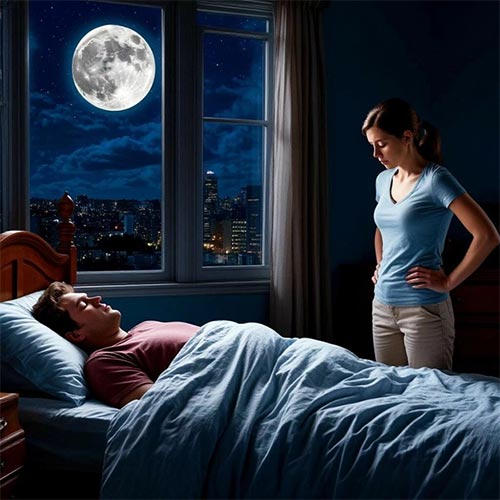
Sleeping on the back – Problem №1In fact, there’s nothing wrong with sleeping in this position if it doesn’t bother you. However, for many, sleeping on the back is not suitable because of snoring. A person may sleep soundly, but their snoring may disturb their loved ones. Or they might wake up themselves because they're snoring. Even if a snorer thinks they are sleeping well, that’s not true. Snoring leads to microawakenings. It doesn't matter that you don’t notice them. They are there, that’s a fact. You can easily check it online: a person wakes up for 3–4 seconds without coming to full consciousness. Because of this, firstly, recovery after workouts worsens; secondly, you become less productive the next day (the nervous system didn’t recover well). Therefore, sleep on your side, placing a small pillow between your knees: this will help with snoring and allow your spine to relax. For those for whom sleeping on the side doesn’t stop snoring, I recommend tilting your head back: lie on your side and slightly bend your neck (chin up). This clears the airways, so you won’t snore. «I’ll catch up on sleep over the weekend» – Problem №2You didn’t get enough sleep from Monday to Friday but kept going with the thought that you’d make up for it on the weekend. This is nonsense. Because out of the sleep your brain missed, it can compensate for only about 25% over the weekend. Do I need to explain that sleep deprivation is bad and: - minimizes your results if you’re training; - ages the body; - lowers productivity during work hours; - makes you excessively rely on stimulants like coffee or energy drinks to stay awake at work. So don’t fool around; just try to adjust your sleep schedule: even if it’s 7 hours and not the recommended 8-9 hours, let it be the same 7 hours every night. Also, it’s important to go to bed and wake up at the same time each day. Over time, your body will adapt, and not only will you feel rested after these 7 hours, but you’ll recover better and won’t feel like a wreck at work. Waking up at 3:00 AM every night – Problem №3You know we have different sleep phases, right? And the body transitions from one phase to another. To move into the next phase, the brain needs to exit the previous one. When you wake up in the middle of the night (or early morning), that’s the transition from the REM phase (rapid eye movement sleep) to the slow-wave phase. You simply hit the transition from one state to another. It happens. To avoid waking yourself up further, don’t move, grab your phone, or check the time. Just close your eyes and keep sleeping. You don’t need to know the time or how many hours remain until you need to wake up. That will just energize you. Just go back to sleep. Can’t fall asleep, thoughts keep racing – Problem №4Even if you manage to fall asleep, worries won’t let you relax and fully rest. So: - try not to watch the news before bed if it’s the cause of your anxious thoughts; - dream about what your life could be like under different circumstances (shift from negative to positive thoughts); - read something you enjoy before bed (preferably a physical book, not an electronic one). In general, try switching your thoughts to sensations. Can’t fall asleep for no apparent reason – Problem №5Didn’t expend enough energy or had too much activity during the day? In reality, there’s always a reason why you can’t sleep. You just don’t know or haven’t identified it. You can’t fall asleep either because you didn’t move much during the day or because you moved too much. Let me explain. 1. Low physical activity. Sometimes, people regularly train and have plenty of energy. They spend it on workouts, work, and hobbies. By the end of the day, they’re drained, go to bed, and fall asleep without issues. Now imagine a day off with no workouts or work – just a lazy day watching shows. In this case, the energy hasn’t been spent, and the nervous system isn’t as exhausted as usual, so the brain doesn’t feel like sleeping: there’s still energy left to be active. I’ve noticed this in myself and clients have often reported worse sleep on weekends compared to workdays. 2. High physical activity. This can mean intense workouts combined with emotional stress. All this increases wakefulness hormones like cortisol, adrenaline, and norepinephrine: the nervous system becomes overly activated, making it hard to slow down and fall asleep. I understand that not everyone can reduce their activity or mental stress during the day, so the only solution is to use supplements to calm the nervous system – glycine, magnesium, or GABA. Glycine and magnesium are milder options, while GABA provides guaranteed results. Sleeping less – Problem №6With age, people sleep less: the production of the sleep hormone melatonin decreases, which can shorten the duration and depth of sleep. Pay attention to older people; they sleep less. So: - either accept the situation as it is (if less sleep doesn’t bother you and you recover from workouts in that time); - or use supplements to help with sleep (like melatonin, GABA, or 5-HTP). Cramps interfering with sleep – Problem №7I’ve written extensively about cramps. They often arise due to insufficient levels of minerals like calcium, potassium, and magnesium in the body. Training, physical labor, emotional stress, and poor diets lacking these minerals can all lead to cramps during sleep. And this is usually the case. So first, I’d recommend taking these minerals and observing whether the cramps go away or not. That’s the simplest solution. If nothing changes, you’ll need to look for another cause (my article on cramps is linked above). For example, too much coffee during the day or other stimulants. Finally, here’s my article on daytime naps. You might find it interesting. SIMILAR ARTICLES
COMMENTS |