|
» »
Features of training the female back
Author: Pavel Shaikin - master trainer in fitness (FPA). All articles by the author ➤
Dreaming of a feminine, toned, and beautiful back? Afraid of ruining your figure? I will share my experience and reveal exercises for forming a beautiful back. Let's start with the foundation that will help us moving forward, and quickly go through anatomy, physiology, and nutrition. The back consists of many muscles that have several layers of depth. When we talk about back training, we usually mean the superficial back muscles that can be contracted at will. Anatomy of the BackLet’s look at some main muscles that can be seen on the back: The latissimus dorsi muscles, resembling two triangles, extending from the shoulder bone to the sacrum and ilium. 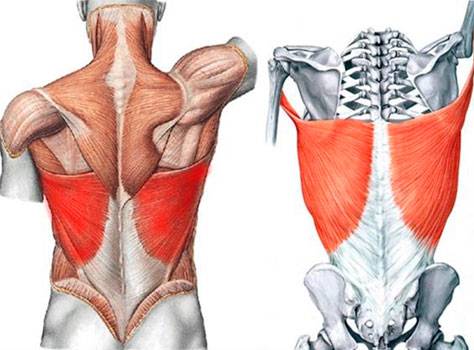
The infraspinatus muscle, located on the scapula. 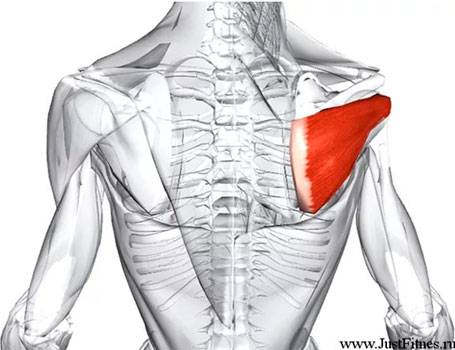
Trapezius muscles, located on the neck and extending throughout the thoracic region. 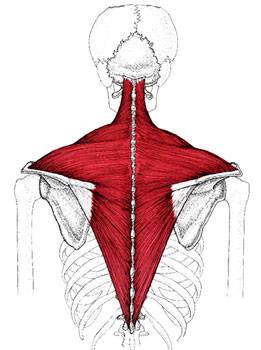
The teres major muscle, located near the armpit. 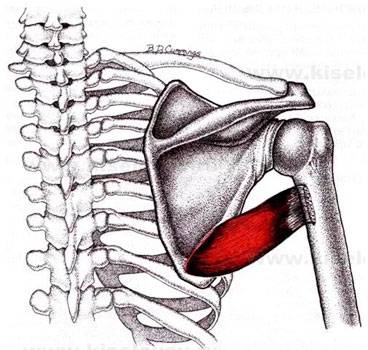
A group of muscles that straighten the spine (along the entire spine). 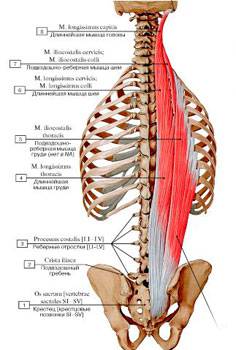
As we know, there are 3 energy systems that fuel our muscles. In the glycolytic pathway, where the main source is glucose, we can develop both muscle volume and strength endurance. The number of repetitions for muscle volume is approximately 8-15 repetitions with significant intensity. When developing strength endurance in the range of more than 15 repetitions, the intensity is insufficient to lead to myofibrillar hypertrophy (the growth of muscle fibers due to contractile proteins). Thus, we can manipulate these parameters. I want to note that muscle composition (the ratio of fast and slow muscle fibers) differs among individuals. Even the composition of different muscles in one person varies. This means that the intensity and mode of muscle work can deviate and must be adjusted empirically. For a toned back, healthy adequate nutrition with a slight caloric deficit or balance is needed. Only with a small percentage of body fat will the beautiful relief be visible. Let’s Clarify the TerminologyThe popular division of the back into upper, middle, lower, inner, outer parts, thickness, and width is left aside. We need more precise information without confusion and myths. We will divide the back in the following manner, which can be associated with exercises: 1. At the very top, we have the trapezius, which is divided into 3 sections – upper, middle, and lower. 2. The latissimus dorsi muscles, forming triangles or wings. 3. A group of muscles under and on the scapula. 4. The muscle that straightens the spine, forming 2 columns, between which the spine is located. Exercises can load different back muscles. On the one hand, we need to load all the main muscle groups, and on the other hand, minimize the load on those muscles that can spoil the feminine figure. Let's Consider Exercises and the Main Muscle Group Being Loaded4. Back extensions lying on the floor - for the spinal extensor muscles. 5. External shoulder rotation at the low pulley – infraspinatus muscle (scapular muscle group). So this is the complete arsenal of exercises that form the back. However, there are also various nuances related to technique and muscle work mode, as well as exercises that can harm a woman's back. Technical Nuances and Mode of Work1. The upper pulley row should be performed with minimal involvement of the arms, focusing on the work of the shoulder blades. This exercise increases the triangular shape that brings the figure closer to an hourglass shape, visually reducing the waist. The muscle work mode is 10-15 repetitions per set. Many make the mistake of disrupting the neutral position of the spine and arching in the lumbar region. This position is dangerous for both the spine and the internal organs. The same applies to pull-ups on the gravitron. 2. The horizontal cable row develops the trapezius more than the latissimus dorsi. If you have a predisposition to strong work of the upper trapezius, the number of sets should be limited, and the work mode should be 15-20 repetitions with moderate weight. This exercise is necessary, as it strengthens the rhomboid muscles, which are among the stabilizers of the scapula. It's important to keep the torso still, with only the shoulder blades and arms moving. 3. Back extensions lying on the floor can be performed in both static and dynamic forms, with the number of sets ranging from 1 to 3 and a work mode of 15-20 repetitions. This exercise engages the entire posterior myofascial chain, including the glutes, which may contribute to their growth. To do this, you need to tense your straight legs and lift them along with the thoracic part of the spine without throwing your head back. This exercise is placed before the main exercises. 4. External shoulder rotation at the low pulley targets the weak muscles of the rotator cuff, which stabilizes the humerus and helps to open the chest. From the perspective of the external appearance of the back, it makes the infraspinatus muscle on the scapula visible, emphasizing the quality of relief when there is a low body fat percentage. The number of repetitions is 10-15, with minimal weight. This exercise is placed before the main exercises. 5. The pullover at the upper pulley eliminates the involvement of the shoulder biceps, which work during the upper pulley chest pull, loading the latissimus dorsi and teres major muscles. The number of repetitions is 15-20. This exercise is used as the first additional exercise before the main ones when a focus on the latissimus dorsi is required. Some Exercises That Can Spoil the FigureThese exercises include: They increase your trapezius, which can stick out prominently. The most unsuitable exercises for women who want to look feminine. Probably, with weights greater than an empty barbell, they can increase your waist and the upper part of your trapezius. Aside from the risks of injuring the shoulder joints, this exercise effectively loads the teres major muscles. If they grow, they can stand out significantly on the sides in the area of the armpits, which is not very feminine. When selecting and dosing exercises, it is necessary to consider the individual figure, and the above advice may not help everyone. Are there secret exercises for the back? There aren't, but there are nuances of technique and a general approach to training. This approach includes specially corrective exercises for correcting poor posture. The problem is that most people have poor posture, which visually worsens the appearance of the back and figure as a whole. Working on posture correction should be done under the guidance of a knowledgeable personal trainer, as it requires evaluating posture and types of deviations, as well as strategizing to meet your goals. Therefore, if you care about your posture, the results of training, safety, and have the means to train personally, don’t miss this opportunity. Mobility and Flexibility of Muscles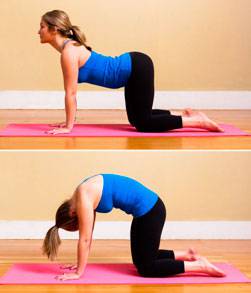
If you have insufficient mobility of the spine, you can add an exercise called "cat and cow" to your workouts. It involves smooth movements with rounding and arching of the back from a kneeling position. It is performed before the main part of the workout, after a general warm-up. Flexibility exercises are selected based on the lack of mobility in certain muscle groups. Stretching enthusiasts should be warned that hypermobility (excessive mobility) in the joints is not a healthy norm and leads to a number of problems. Training to post-workout soreness, especially with a deficiency of calories, proteins, and fats, can lead to a loss of muscle elasticity, as dead muscle fibers are replaced by connective tissue. Train smart! SIMILAR ARTICLES
COMMENTS |