|
» »
Do you need to surprise your muscles to make them grow?
Author: Mikhail Ziborov - author of the site makefitness.pro. All articles by the author ➤
The thesis is simple: muscles supposedly need to be constantly surprised with something new so that they do not adapt to the load and instead grow stronger. This thesis is actively promoted among trainers and gym-goers alike. It can also be phrased as: "You need to constantly do something new to surprise your muscles so they grow." To jump ahead, I will say that this thesis is not entirely accurate. In fact, it can be more harmful for muscle hypertrophy. Such questions arise for each of us. You can ask your question and get a well-reasoned answer in our Telegram channel. Because few fitness bloggers and trainers will spend their time on their subscribers. But we will. 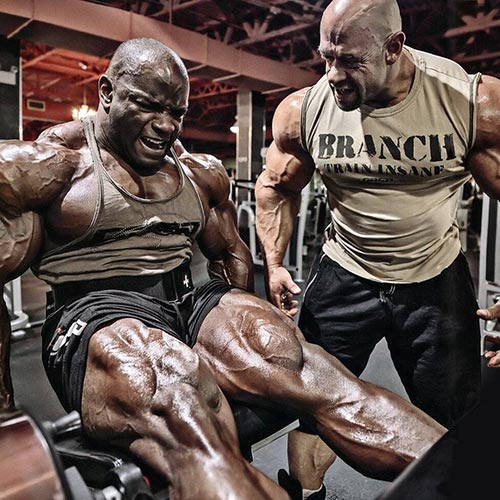
What Does "Surprise the Muscles to Make Them Grow" Mean?Surprising muscles implies: - changing exercises to similar but slightly different ones that provide a different load on the muscles (for example, switching from barbell bench press to dips, or from bent-over barbell rows to one-arm dumbbell rows); - using various techniques for greater muscle loading (drop sets, supersets, and other types of sets, excluding sushi and rolls); - periodization. In general, to surprise the muscles, one needs to do something they are not used to regularly. Overall, the essence of this thesis is correct: muscles need to experience sufficient stress to increase strength, endurance, and consequently, muscle mass. People attempt to achieve this muscle stress through changing exercises that are biomechanically similar and by using various training sets and techniques. However, such individuals forget that muscle tissue can experience stress without changing the set of exercises and without employing various training techniques. Is it Necessary to Surprise Muscles for Growth?The fact is, muscles do not care whether you surprise them, whether you are working with a barbell or dumbbells (or even with your body weight), whether you are using drop sets or following a classic training scheme. Muscles also cannot count repetitions. The only thing they respond to is the stress from physical load. And it is precisely sufficient stress that leads muscles to develop physical qualities and growth. You can perform the same exercises for a lifetime without applying various techniques, but you can still progress, build muscle, and be a solid performer. 1. Is it necessary to change exercises to surprise the muscles? Here is evidence supporting my statement that nothing needs to change: Scientists compared two groups of men. One group trained with fixed exercises (not changing them for 8 weeks), while the other changed exercises as they pleased (but exercises targeted the same muscle groups). The total work volume in both groups was equal – 3 sets of 6 repetitions 4 times a week. Overall, researchers concluded that muscle development occurred in both groups approximately comparably. However, in the fixed exercises group, muscles grew more. For example, the quadriceps muscle of the thigh. In terms of muscle growth volume, classic training outperforms muscle surprise training! 2. Is it necessary to use drop sets and other sets to surprise the muscles? Here’s a study showing that individuals who trained traditionally and those using drop sets progressed approximately equally. The only advantage of drop sets is time efficiency: they load muscles in a shorter time just as traditional training does with sets and rest between them. In the article on supersets, I mentioned that trainees obtained comparable results for muscle growth: some used various supersets, while others stuck to traditional training. However, these studies numerically show that traditional training, with rest between sets and exercises, leads to more significant muscle growth. For the fastest gains in muscle mass and strength, it is better to stick to the classic approach – set-rest, set-rest! Supersets are good, but they fatigue the nervous system more, leading to minor underperformance in workouts. In simpler terms, due to fatigue, individuals slightly underperform and miss out on the load that would lead to more muscle growth. 3. Periodization for surprising muscles. Strictly speaking about muscle hypertrophy, according to this study, both periodized and non-periodized training resulted in similar muscle tissue growth. However! Periodization effectively boosts muscle strength, and that’s a fact. But our training programs from our team Makefitness include periodization while adhering to classic training schemes. That is, we increase mass while maximizing strength indicators. Also, do not forget that muscle mass growth occurs not only due to training but also due to nutrition. Not getting enough protein means you won’t gain weight. Additionally, a great means for muscle hypertrophy is sports nutrition. ConclusionAny manipulations to surprise muscles often turn out, at best, no better than classic training, and at worst, slightly inferior in terms of muscle growth. SIMILAR ARTICLES
COMMENTS |