|
» »
How to increase strength with isometric exercises
Author: Mikhail Ziborov - author of the site makefitness.pro. All articles by the author ➤
Strength indicators are among the main factors for an athlete. However, not everyone knows how to increase strength when its limit seems to have been reached, or how to more quickly improve strength metrics. Below you will learn:
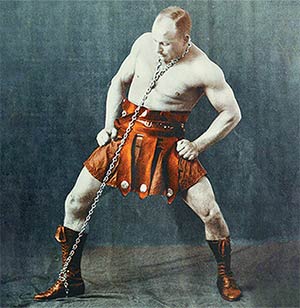
What are Isometric Exercises?Isometric exercises are very different from classic exercises with any equipment: https://makefitness.pro/upragnenia-v-domashnih-usloviah/ and from bodyweight exercises: https://makefitness.pro/upragnenia-bez-gantelei-v-domashnih-usloviah/.
Isometric exercises are exercises characterized by no change in muscle length, meaning no contraction or movement (from the Greek "Isos" – same, "metron" – measure). They are a type of static exercise, but there is a difference:
They are often referred to as isometrics or isometry, and they can be classified into subtypes: The peculiarity of the first type, which involves absolutely no movement, is the impossibility of overcoming resistance (pushing against a wall, attempting to lift an unliftable weight in a deadlift, etc.). Such exercises help strengthen tendons, muscles, and develop overall strength. The peculiarity of the second type, where there is movement, allows for the development of strength in muscles and tendons at the required points in movement. For example, overcoming the sticking point in the bench press with a barbell when you can lift the weight during the initial phase of the movement, but as the bar moves upward, it becomes impossible to fully straighten your arms. Isometrics are often contrasted with isotonic exercises (those dynamic ones—with barbells, dumbbells, bodyweight, etc., where the tension remains constant throughout the movement). However, isometric training has one significant drawback compared to isotonic: it cannot grow muscles, despite significantly strengthening them. How to Perform Isometric ExercisesFirst, let's look at examples of different types of isometrics. Standing/Sitting Bicep Curl with a Strap or Chain. Take one end in your hand, step on the other end, or securely fasten it somewhere. Try to bend your arm. This is a pure isometric exercise. Barbell Squats. The feature of this exercise is that at some point, you pause at a certain point, holding the weight still, then lift it again for a short distance, and pause again, then lift. This is an isometric-dynamic exercise. Bench Press. For this exercise, you need a partner or some restriction that prevents you from pressing the weight all the way up. Take the working weight, start to lift it. After about 15-20 cm, your partner or the restriction prevents you from fully straightening your arms, and you continue to push up for a few seconds. For all these exercises, the common aspects remain the degree of tension, duration of the effort, rest time between sets and exercises. Tension. You should gradually tense the muscle to its maximum, meaning your pressure increases to the highest level. Similarly, you should relax the working muscles: after maximum tension and holding for a few seconds, start to gradually relax the muscle. If you relax suddenly, you may feel pain in the tendon. You CANNOT tense and relax the muscle to the maximum all at once. Duration of Exercises. Initially, I suggest limiting the tension to 6-7 seconds. Later, you can increase this time to 12-15 seconds. Start counting from the moment you begin the exercise, not from the maximum tension. The reason why such short intervals are most effective for strength growth can be read in the study https://www.ncbi.nlm.nih.gov/pubmed/30734104. Rest between Exercises and Sets. A rest period of 40-60 seconds is sufficient between sets. This is due to the specificity of the exercises (muscles recover faster). Rest between exercises can range from 60-80 seconds or less if targeting different muscle groups. Number of Sets and Exercises. For beginners and experienced athletes, 3-4 sets and 1-2 exercises for one muscle group will be sufficient. Professional athletes typically do more. You can learn about the principles of isometric training here: When to Do It. Isometrics do not take much time, so it is reasonable to do them: - at the end of a full workout for the same muscle groups that were worked earlier (the muscles and tendons are warmed up); - as a separate workout, but first, ensure you properly warm up all the muscles that will be working. You can see how effective isometric exercises are in developing strength in the video: Important Aspects of Isometric Exercises
Recovery. This is a very important point, as any workout requires recovery afterward. Tendons, ligaments, and joints recover much slower than muscle tissue, so excellent helpers include: Frequency of Isometric Training. For a beginner, 2-3 such workouts will be sufficient to build strength. An experienced athlete can go up to 4, but it is essential not to forget about recovery. You can watch specific exercises with execution technique in the video: SIMILAR ARTICLES
COMMENTS |