|
» »
Which form of calcium is better to choose?
Author: Mikhail Ziborov - author of the site makefitness.pro. All articles by the author ➤
We have known since childhood that calcium is necessary for the formation (strengthening) of bones and teeth, and this is far from all its "duties" in our body. However, few people know how to choose calcium, how to take it, etc. Moreover, many online sources mislead uninformed readers (whether intentionally or not). For example, that calcium from dairy products is "bad," while calcium from poppy seeds is a "must-have." This is particularly pronounced among vegans. My goal is to reveal the truth, relying on various sources (scientific literature, studies, well-known individuals, etc.). Therefore, in this article, you will learn: What Forms of Calcium ExistThere are many forms of calcium, but not all of them are dietary. In the market of sports nutrition and pharmacies, you can find the following forms of calcium: 1. Gluconate (C12H22CaO14, calcium and gluconic acid, "chelated" form); 2. Calcium carbonate (CaCO3, calcium and carbonic acid, includes coral calcium); 3. Dicalcium phosphate (CaHPO4, also called calcium dihydrate); 4. Calcium chloride (CaCl2, calcium combined with chlorine, also known as calcium chloride); 5. Calcium citrate (Ca3(C6H5O7)2, calcium and citric acid, chelated form); 6. Calcium "chelate" (calcium with amino acids: glycine, lysine, cysteine, etc.; for example, calcium glycinate); 7. Hydroxyapatite (formulas – Ca10(PO4)6(OH)2 or Ca5(OH)(PO4)3, also known as calcium phosphate hydroxide). Other forms are used in the food industry, but not as dietary supplements: 8. Calcium lactate (calcium and lactic acid); 9. Calcium dihydrogen phosphate (CaH2PO4, calcium combined with orthophosphoric acid). What to Look for When Choosing a Calcium SupplementMany people approach the choice of calcium in a one-sided way, focusing only on bioavailability (the amount of calcium that the body will absorb). However, it is also necessary to consider the amount of the main element (calcium) in each form. I remind you that any form of calcium is not pure calcium but a mixture with other components (in chelated forms, calcium is mixed with amino acids or other ligands). For example, in calcium carbonate, from 1000 mg of the substance, there are 400 mg of pure calcium. Its bioavailability is, on average, 15% (i.e., 15% of 400 mg is 60 mg). However, in calcium citrate, from 1000 mg of the substance, only 211 mg is the main element (the remaining space is occupied by citric acid). The bioavailability of citrate is higher than that of carbonate: 40% on average compared to 15%, respectively. And 40% of 211 mg is 84.4 mg. This means that when comparing 1000 mg of calcium carbonate with citrate, more of the element of interest will be absorbed in the intestines. It’s that simple. Furthermore, attention should be paid to the side effects of each form. For example, calcium carbonate can lower stomach acidity under certain conditions (which is a problem for those whose acidity is already low). Therefore, when choosing a calcium dietary supplement, consider: Which Forms of Calcium Are BetterLet's break down all the forms you can find in pharmacies or sports nutrition stores and examine their advantages and disadvantages. Calcium Gluconate 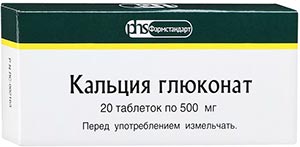
In the food industry, it is designated as E578. It can be found in pharmacies and is extremely inexpensive. In the body, it breaks down into gluconic acid and calcium. This acid acts as a synergist for the body's antioxidants (helping and enhancing them), and it also prevents calcium deposition (minimizing the risk of calcium stones in the kidneys). Calcium gluconate effectively binds heavy metals in the body, reduces inflammatory processes, and decreases histamine production, which is a primary cause of allergies. Bioavailability varies according to different sources, with figures ranging from 3-6% to 30%. Whom to believe, I don't know. The website vkusologia.ru, which I trust, claims that absorption by the body is high. This is confirmed by the experience of Soviet people: at that time, there was simply no other cheap form of calcium (there was calcium chloride, but it was used more for medical purposes and was more expensive than gluconate as a supplement). Calcium content in the substance is only 9%. That is, in 1000 mg of the substance, there are only 90 mg of calcium. Considering the bioavailability of gluconate, it turns out that we cannot cover even half of the daily calcium requirement: you would have to take handfuls of tablet gluconate, and the side effects of gluconic acid in cases of overdose are not to be neglected (the site vkusologia.ru mentions a strong laxative effect when consuming 20 g at once). Pros: low cost, positive impact on the body not only from calcium but also from gluconic acid. Cons: you will have to take large amounts, inability to meet daily needs (the maximum dose per day is 9 g), incompatible with calcium carbonate, and it reduces iron absorption (should be taken with a 2-hour interval), and is contraindicated for pregnant women (animal studies showed poor fetal development). Calcium Carbonate 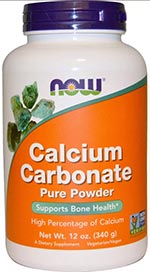
European labeling – E170. Sold both in pharmacies (for example, "Calcium D3 Nicomed") and in sports nutrition supplements (either separately or as part of vitamin-mineral complexes). Calcium carbonate lowers stomach acidity (contraindicated for people with low acidity), after which the body raises acidity above normal ("acid rebound"). However, this is not a problem for healthy people. Serious complications can arise from a one-time intake of 1400 mg of calcium carbonate. In the stomach, it breaks down into components, releasing carbon dioxide (flatulence and burping may occur). But this form does not reduce iron absorption (as with sulfate) compared to others. Moreover, using calcium carbonate alongside citric acid can increase absorption to 40% on average (citric acid + calcium carbonate = calcium citrate). Nowadays, coral calcium (Coral calcium, calcium from oyster shells) has become fashionable, which manufacturers promote as the best. In reality, it is the same carbonate, but derived from shells rather than useful minerals (it is also present in eggshells). This is mentioned here on Wikipedia. Bioavailability is on average 15%. Calcium content in the substance is the highest among all forms – 40% (in 1000 mg of the substance, there are 400 mg of calcium). Pros: the highest calcium content among all forms, does not reduce iron absorption, relatively inexpensive (slightly more than gluconate), can be used for heartburn (lowers stomach acidity). Cons: many side effects (fluctuations in acidity, flatulence, burping), incompatible with calcium gluconate. Dicalcium Phosphate European code – E341. It is found in vitamin-mineral complexes from sports nutrition and dietary supplement manufacturers (for example, Complivit). Calcium is combined with phosphorus in a ratio of 24% to 19.5%, respectively. This is one of the forms of calcium present in milk and is used to build our teeth and bones (besides other forms of calcium). Bioavailability of this form is not well defined (I didn't find reliable sources), but there are grounds to assume that it is low, as calcium competes for absorption with phosphorus (antagonism). Calcium content is 24% (240 mg of calcium in 1000 mg of the substance). Pros: enriches the body with two important microelements, relatively inexpensive. Cons: possible formation of insoluble calcium-phosphate salts in case of low stomach acidity (lactose in milk can counteract this), reduced absorption due to antagonism with phosphorus. Calcium Chloride European code – E509. It is mainly used as a medicinal agent but can also be used as a food supplement. Some producers of dairy products use this form to enrich their products. Bioavailability of calcium chloride when taken orally is 20-30% (see on Wiki Calcium Chloride as a medicinal product). Calcium content is 270 mg per 1 g of the substance. Pros: moderate cost, solves many tasks (both as calcium and generally as a medicinal agent), normalizes the ionic composition of the blood. Cons: lowers levels of potassium and magnesium (they need to be taken additionally), contraindicated in cases of atherosclerosis and thrombosis (used as a hemostatic agent for internal bleeding, thus affecting blood clotting), may cause heartburn in case of overdose, and is in the risk category for the fetus during pregnancy. Calcium Citrate 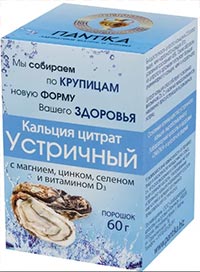
European marking – E333. It is obtained from carbonate or hydroxide by adding citric acid (citrate). This form is one of the best (the worst of the chelated forms, characterized by a large volume of absorption). It can easily be found in pharmacies and on sports nutrition store shelves. There is an American study confirming that calcium citrate prevents the development of colon cancer. This form is also listed by the FDA (the U.S. Food and Drug Administration) as a safe substance, unrestricted for use. There is also oyster calcium citrate (this is carbonate from oysters with added citric acid). Bioavailability hovers around 40-44%. Calcium content is 211 mg per 1 g of the substance (21%). 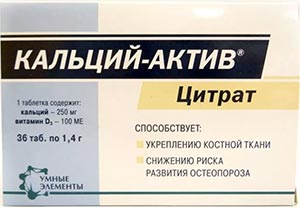
Pros: good absorption, does not increase stomach acidity and absorbs well even with low acidity, possesses antioxidant properties, approved for consumption by infants under one year old, average cost. Cons: suppresses iron absorption (there should be a 2-hour gap between taking them), poorly soluble in water (thus, its bioavailability is reduced compared to other "chelates"). Calcium Chelate 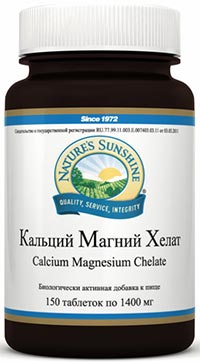
Information about chelated forms on the internet is quite limited (mostly available on the websites of companies producing dietary supplements, but there is little objectivity). The most common form of chelate is calcium glycinate (combined with the amino acid glycine). The sources available to me indicate the absence of side effects from these forms and promote them as the safest options. Bioavailability is high – around 80-90%. Calcium content is unknown. Pros: high absorption, and as a result, cost-effectiveness, absence of side effects. Cons: reduces iron absorption, like other forms, and has a high cost. Hydroxyapatite This also belongs to the group of chelated forms with high bioavailability. According to Wikipedia, our bones consist of this form by 50%, and teeth by 96%. However, it does not specify how well it dissolves in water and other key points. It is also a chelated form (manufactured from animal bones). Bioavailability is comparable to other chelates, i.e., around 80-90%. Calcium content is currently unknown. Pros: high absorption, chelate (organic form), no side effects. Cons: like other forms of calcium, it reduces iron absorption from food or supplements, and has a high cost. You can learn more on Wikipedia, and:
- vkusologia.ru, gastroscan.ru – on gluconate, carbonate, phosphate, and calcium chloride (what they are for, in which medicines and dietary supplements they are present); 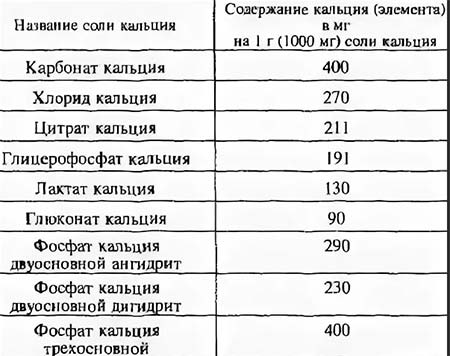 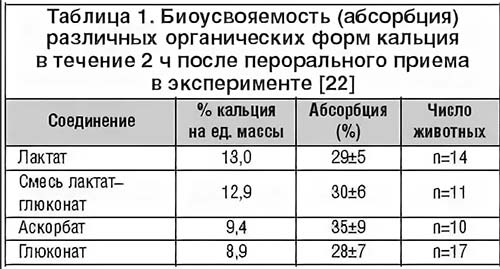
How to Take Calcium SupplementsCalcium is essential for everyone, especially for those with active lifestyles and regular training, whether you work out in the gym (weightlifting, with dumbbells and machines) or perform bodyweight exercises. If you are taking calcium exclusively, it’s best to take it in the evening (scientists suspect that minerals are absorbed better at this time). Take it several times a day, as calcium is not fully absorbed if a single dose exceeds 400 mg. Do not take it with iron and other antagonists (such as phosphorus, zinc, fats from food or Omega-3, phytates, phytic acids, and oxalic acid from vegetables and greens, oats). Synergists (which help with absorption) include vitamin C, vitamins B6 and B12, D, and K. And while water-soluble (C, B6, and B12) can be taken in the evening along with calcium (they also influence protein synthesis during sleep), fat-soluble (D and K) are better taken in the first half of the day.
In summary: ConclusionThe most optimal form, in my opinion, is calcium citrate: everything is balanced here – price, bioavailability, side effects, and more. Moreover, you can make calcium citrate at home: purchase calcium carbonate (which is cheaper) and citric acid. Consume them together, and voila, you have citrate (it's noted in Soviet biochemistry textbooks that citric acid increases the absorption of carbonate). Wishing you all the best and good health. SIMILAR ARTICLES
COMMENTS |