|
» »
Rational nutrition instead of diets (it's not all about calories)
Author: Nikolai Borisov - trainer, champion of Russia in powerlifting. All articles by the author ➤
"I have never eaten so much and lost weight" - I have heard this phrase said with surprise and joy. How does this happen? I'll explain with a specific example. The mid-90s of the last century, a sports camp on the banks of the Volga. Abundant and diverse food. In my opinion, there was a bit too little protein, but it was enough for the boxers, skiers, and other athletes. The story is not about athletes who could lose weight from training twice a day. It's about the camp staff who led a habitual sedentary lifestyle and ate alongside the athletes and coaches. These were several girls and women - medical staff and other personnel. They did not increase their physical activity, did not train with the athletes, almost did not swim due to the very cold summer, and spent their free time watching TV. However, access to favorite pastry products was hindered by distance. There were no stores in the neighboring villages. The nearest town was 4 km away in a straight line, not much for a healthy person. But this straight route went through a forest overgrown with dense shrubs and littered with fallen trees. It might be possible to make it through, but the clothes would have to be discarded. The second route lay by water. 4.5 km to the town upstream was a challenge that not every athlete could paddle without changing. For the powerlifting team, rowing to the town was a high-intensity aerobic workout. The third route to the town was 10 km along a gravel road of sand and very large gravel, almost cobblestones. It could be done by bike back and forth in an hour if one didn't mind the bike. But all the bikes were with our group, and the female staff never asked for them. The only car belonged to the chairman of the sports committee, who occasionally came to the camp for inspections. There were no pizza deliveries by drones at that time, not even in fantastic stories. Thus, the girls were deprived of daily access to confectionery and other "junk foods." Yes, some treats came to them from parents visiting their children on weekends and through other means. But "junk" was no longer a daily occurrence. The ready-made meals in the cafeteria solved the problem of meal preparation. It's no secret that many replace breakfast with sandwiches, lunch with fast food, and dinner with delivered pizza because they don't cook for themselves due to laziness or lack of time. The camp’s meals replaced sandwiches with porridge, etc., for the staff. Result: over the summer, overweight, plump, and average-sized women lost weight to varying degrees without any physical activity. They ate to their fill, meaning they did not experience hunger (which is painful for the nervous system) and received all the necessary nutrients for the normal functioning of the body in quantities close to optimal. Conclusion: there is no point in inventing exotic diets; it is essential to eat properly. Simple rules of rational nutrition1. What to limit. Sugar. A lot has been written about it, and there’s no point in repeating it. Don’t forget it’s present in juices and sodas, even if they are labeled "light." Salt. Chips, crackers, and the like can be considered poison. Dried calamari and octopus contain a lot of protein (70-90%), but due to their high salt content, they are not suitable for regular consumption. Concentrated fats from mammals - lard and butter. Dairy fats will enter your body in sufficient quantity from cottage cheese, milk, and cheese. Any meat contains a certain percentage of fat, and that fat will be enough for you. There’s no point in adding concentrated fats in the form of lard and butter to your diet. Wheat. It is offered to the population in excessive amounts. Thousands of varieties of rolls are made from it, meat and cottage cheese are wrapped in it, meat and fish are battered in it before frying (it’s much healthier to coat in egg powder), dozens of types of pasta are made from it, and it forms the basis of pies, pizzas, and many other foods. White bread is added to meat patties, and it’s healthier to replace it with eggs. In whole grain bread, wheat flour is usually listed first! Even in bread labeled as rye or Borodinsky, wheat flour is often the first or at least second or third. In general, you will get some amount of wheat anyway. There’s no point in consuming more wheat than buckwheat or rye. The most useless product made from wheat is semolina. 2. What should be abundant in the diet. 1. Protein. It should be complete, containing all necessary amino acids in sufficient amounts. For weightlifters and powerlifters, it is recommended to consume 2.2-2.3 g per kg of body weight per day, and for endurance sports, around 1.8 g. 2. Sea fish. The necessity of fatty acids for health has been sufficiently discussed. 3. Unrefined vegetable oil. The same fatty acids. 4. Greens and vegetables. They promote normal gastrointestinal function, are a source of minerals and vitamins, and shift the acid-base balance towards alkalinity (this last function is only effective when consumed raw). 3. Variety. Different foods are rich in various minerals, amino acids, and vitamins. Eat several types of grains: buckwheat, brown rice, oatmeal, rye, millet, barley..., eat a lot of different vegetables, and your body will receive all the necessary minerals, while the amino acids from different grains will complement each other, making the protein you obtain closer to complete animal protein. Include nuts and legumes in your diet. 4. Food processing. Do not overdo thermal processing. Protein in highly fried meat and fish denatures. As a result, it is not absorbed because the tightly coiled spirals cannot be broken down in the gastrointestinal tract. Do not overcook vegetables; you will lose a large portion of vitamins. Softened fiber does not stimulate intestinal peristalsis. 5. Thorough chewing of food. Since childhood, everyone knows: "When I eat, I am deaf and dumb." But who follows this? If you respond to each question posed to you during meals with a significant delay by saying, "Do you want me to choke?" the people around you will eventually stop bothering you. Acid-Base Balance (ABB)Maintaining the ABB is not a simple rule. From advertisements for toothpaste, everyone is familiar with the acid-base balance (ABB) in the mouth—also a phenomenon described in other words. The ABB in the body is vital. ru.wikipedia.org/wiki, but unfortunately, it is rarely taken into account when planning a diet. Athletes need to pay special attention to the ABB, as physical exertion acidifies the body. Often, this is the reason for an athlete's illness during the pre-competition preparation period; pathogenic bacteria thrive better in an acidic environment. Stress and lack of fresh air shift the ABB towards acidity. Competitions are a significant stressor, and for most, the estimates and workouts at submaximal weights are stressful. For beginners, just appearing in the gym can be a stressor. The lack of fresh air exists in almost every enclosed space, particularly in gyms. All of this needs to be compensated with food that shifts the ABB toward alkalinity. 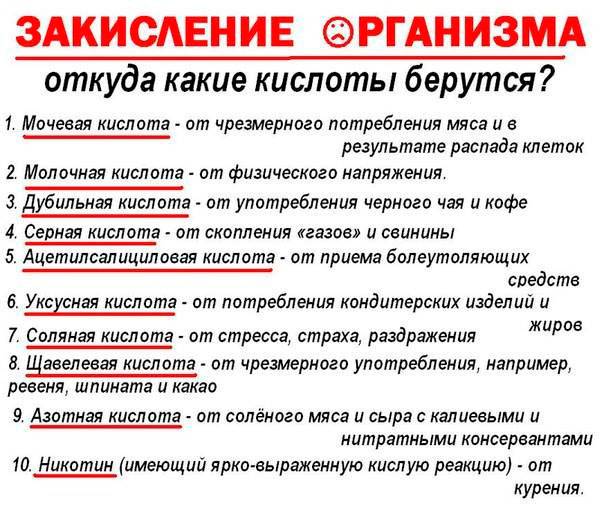
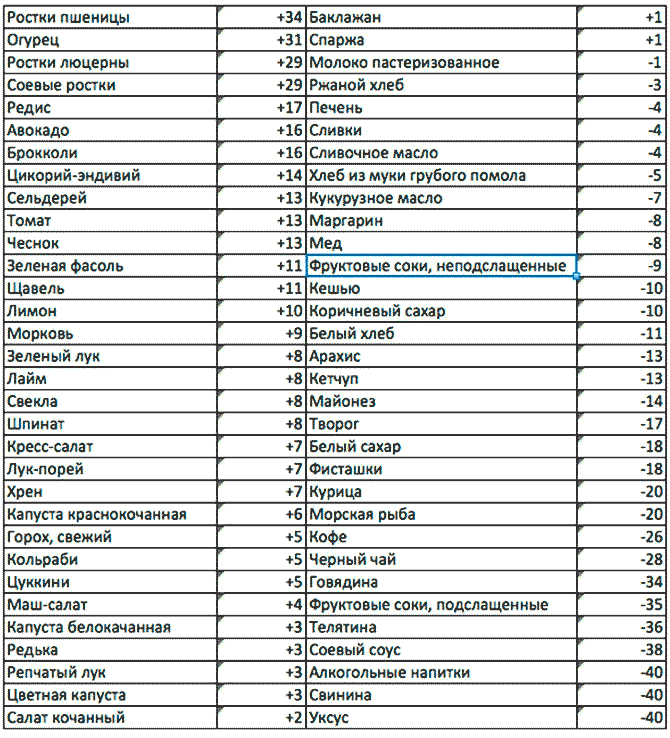
Acidosis (acidification) leads to many diseases. Otto Warburg spent 24 years of his life proving that in an oxygen-saturated environment with a pH of 7.43 and above (slightly alkaline environment), cancer cells do not multiply. In 1932, he was awarded the Nobel Prize in Chemistry for this. His students later proved that in this environment, parasites, viruses, bacteria, and fungi do NOT develop. lubodar.info. Especially acidic environments exist in the center of cancer tumors, where the most terrifying mutant cells multiply. The table below contains some food products and is intended solely to help provide a general idea of the alkalizing and acidifying properties of foods. The higher the positive value in the table, the more alkaline the food, and the lower the negative value, the worse it is for the body's pH (more acidic).
Hydration RegimenRecently, it's become fashionable to walk around with a bottle and regularly sip water. Many start drinking before warming up and take sips from the bottle after each set. It looks a lot like counting beads. Perhaps holding a bottle calms many people or helps them focus before a set. But is it beneficial to sip water every few minutes? I think that during the course of evolution, large mammals must have adapted to a different drinking regime. Only a smaller portion of large mammals live permanently on the shore of a water body. Most go to drink a few times a day and do not always have the opportunity to drink from a puddle. Drinking and eating in natural conditions are separated by time. Water, tea, and juice effectively kickstart the digestive process. 0.7 to 1.5 liters (the dose depends on your weight, individual characteristics, physical activity, and weather) stimulate the secretion of gastric juice and saliva. After 15-20 minutes, it’s time to eat. And any liquid consumed earlier than 1.5 - 2 hours after eating (two sips to take vitamins don’t count) dilutes gastric juice - hindering digestion. So why hinder it? Even if you eat only 4 times a day, drinking a liter before meals will garner sufficient fluid in most cases. And if you, as a true athlete, eat 6-7 times a day, it is enough to drink 700-800 ml of water before each meal. An additional intake of water is necessary if you are running a marathon, competing in a triathlon, a skiing event, or a cycling race. In such situations, you’ll need to drink every 10-15 minutes, or even more often in heat. An average fitness training session in an air-conditioned gym does not cause excessive sweating and is comfortably done on the water consumed an hour before, which has been absorbed. Right after training is the best time to drink. Any liquid taken into the body should provoke a vicious appetite within 15-20 minutes. If you start drinking during the warm-up, by the second or third exercise, a healthy person should feel a strong hunger. As a result, you’ll have to stop for meals or continue training in a stressful state, straining willpower, compromising the quality of your workout. If you are training seriously and this is confirmed by drops of sweat on the platform and two wet t-shirts hanging on the bar, it’s worth replenishing lost water during the workout. Of course, there are individuals with stomachs significantly smaller than average or other issues. They truly need to drink frequently. However, for the majority of healthy people, in my opinion, there is no need for that. One should not blindly follow trends. Your individual hydration regimen will depend on your routine, life, work, and/or studies and training. But in any case, it’s worth trying to drink more before meals, and then for a couple of hours, not to interfere with digestion. The rules provided are quite simple. Everyone can follow them, with some festive deviations. What usually hinders rational nutrition are laziness, disorganization, and habits. In the next article, we’ll discuss how to overcome these obstacles. COMMENTS |