|
» »
Medications for liver detoxification and recovery
Author: Nikita Shilkin - Candidate for Master of Sports in Powerlifting and gym trainer. All articles by the author ➤
Important! We do not advocate for the use of steroids and other potent substances. All information is provided so that those who still decide to take them can do so with minimal health risks. The liver has truly phenomenal regenerative abilities. The liver is the only organ that fully restores itself even after the removal of part of it. With proper therapy, even after removing 70% of the liver, it will return to its original size and functions within 3 months. Complete renewal of this organ occurs within 30 days. Thus, at this moment, there isn't a single cell in your liver from what it had a month ago. However, one should not hope that it will renew and cleanse itself on its own, as the load on the liver is constant, and its restorative resources are limited. The foundation for restoring your liver is diet. With improper nutrition, complete cleansing and restoration are impossible. The recommendations are simple:
Medications for Liver Cleansing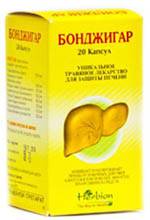
Hepatoprotectors are the general name for a group of drugs designed to improve liver health. Let’s consider some of them. Bondzhigar is a preparation consisting of numerous herbal components. A good hepatoprotector, it has choleretic and antispasmodic effects. The choleretic effect helps some medications cleanse the liver of toxins since bile gathers all the poisons that the liver needs to eliminate. Consequently, increasing bile production means increasing the amount of toxins being excreted from the liver. The course of intake is 1 capsule or 10 ml (if you take it in syrup form) 3 times a day with meals; the treatment lasts 6 weeks. Vegetable oils have a mild choleretic effect, making them ideal for daily prevention. Any vegetable oil is suitable, taken in 1 tablespoon in the morning and evening. They are also a source of unsaturated fats. Allochol contains concentrated bile, garlic extract, nettle, and activated charcoal. It increases the secretory function of the liver and the activity of the entire gastrointestinal tract. The course is 1-2 tablets 3-4 times a day with meals. The treatment lasts 4 weeks, with a break of 3 months or longer. 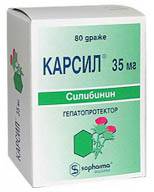
Milk Thistle (active ingredient - silymarin) is a plant, one of the varieties of thistle. It is often used in pure powdered form for internal use. It is a very effective remedy. It has been used since ancient times to treat liver diseases. It helps withstand toxic effects, speeds up the recovery of liver cells, and normalizes liver function. It has antioxidant and immunomodulatory effects. Silymarin is the active ingredient in medications such as Karsil, Silibor, Silymarin-Geksal, Heparsil, Levasil, Simepar, and many others. They typically indicate the amount of pure silymarin; the dosage is 70-100 mg three times a day, and if necessary, the dose can be doubled, with the treatment course lasting at least 3 months. 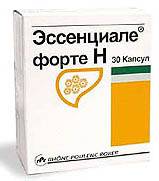
Phospholipids are the basic component of cell membranes. Medicines containing phospholipids, on which the membranes of hepatocytes (liver cells) are built - essentiale, essliver, phosphogliv - influence the cell membranes of all liver structures. Phospholipids restore membranes and organelles, reduce fatty liver degeneration, and normalize biochemical parameters. They also prevent hepatocyte necrosis. All of this is good for restoring the liver after toxic exposure. However, phospholipids should not be taken while the liver continues to experience intoxication. In this case, stronger membranes will delay liver detoxification, and the liver's condition may even worsen. Thus, in the case of anabolic steroids, phospholipids should be taken after the course but not during the course. The dosage is 600 mg three times a day with meals. The duration of intake is unlimited, but 30 days is optimal since the liver completely renews during this time. Amino acids - methionine, ademetionine, ornithine. Dosage - 5-10 grams per day, duration of intake is unlimited. Vitamins. B vitamins and vitamin E have hepatoprotective effects. B vitamins are better used in injectable form. B2 and B6 are administered together, while B1 and B12 are given separately. Dosage - 1 ampoule of each per day, course - 20 days. Vitamin E is best taken in the form of the Aevit preparation, where it is combined with vitamin A for better absorption. The course - 2 times a day at 1 capsule each, duration of the course 30 days. 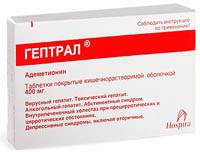
Heptral (ademetionine). Heavy artillery in liver treatment. It revives the liver even in the most severe cases, stimulates liver cell renewal, cleanses the liver of toxins, and has a choleretic effect. The effect lasts for another three months after discontinuing the medication. It also helps combat depression. It is recommended to use the injectable form of the drug, as the oral form acts weaker. Heptral is administered intravenously, via an infusion, or intramuscularly. Dosage is 400 mg per day. In cases of severe liver damage, 800-1200 mg. In the overwhelming majority of cases, 5-15 injections are sufficient, one a day or every other day. Examples of Liver TherapyExample 1 This therapy is designed for use during a course with prolonged (more than 12 weeks) high doses of anabolic steroids with 17-alpha alkylated types. It implies a high-calorie bulking diet containing a large amount of fatty and protein foods. The use of additional medications during the course will compensate for the negative effects from AAS (androgenic-anabolic steroids) and the diet, as well as improve the yield from it. Additional liver therapy after the AAS course will likely not be needed unless your liver was already damaged to begin with. 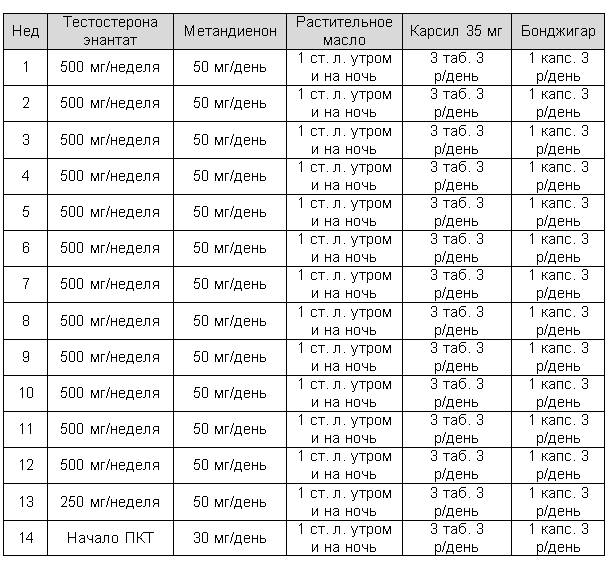
Example 2 Therapy aimed at fully restoring the liver after severe toxic damage. This could be from AAS, alcohol, medications, and much more. It does not matter what exactly. The course of treatment should be combined with a special diet. 
SIMILAR ARTICLES
COMMENTS |