|
» »
Top 6 health markers. Evaluate yourself
Author: Mikhail Ziborov - author of the site makefitness.pro.
2025-02-01 All articles by the author ➤
What do you think health depends on? Genetics? Medications and supplements? Physical activity? Maybe luck? In fact, your health (what it will be like in the future) can be determined right now by several health markers. 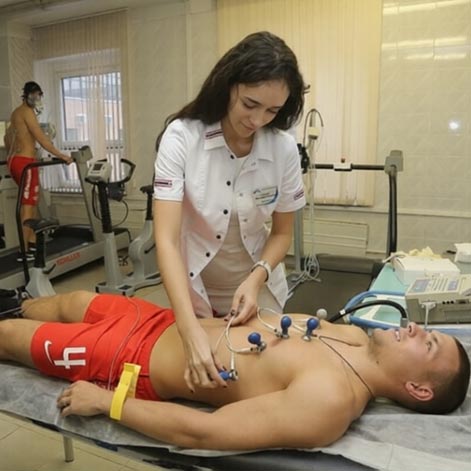
Body fat percentage - marker #1Here we're not talking about aesthetics, but about health. Because health status directly depends on body fat. Visceral fat - the kind that surrounds organs, not under the skin - has a particularly negative impact. And if subcutaneous fat in large quantities leads to deterioration of indicators such as blood cholesterol levels, vascular condition, load on the musculoskeletal system, development of type 2 diabetes (insulin resistance), then visceral fat also increases inflammation throughout the body. And this leads to weakened immunity and progression of chronic diseases. Not to mention that the heart, surrounded by visceral fat, has a much harder time pumping blood. A lot of subcutaneous fat is bad in itself. But even worse - a lot of visceral fat. As a result, the closer you are to a healthy body fat range, the better your health will be in the future. Simply because excess weight won't lead to all those negative consequences I described. For guys and men, it's normal to have an average of 20% subcutaneous fat. If you have 15% - you can be considered quite lean. For girls and women, it's normal to have 20-25%, or even more. 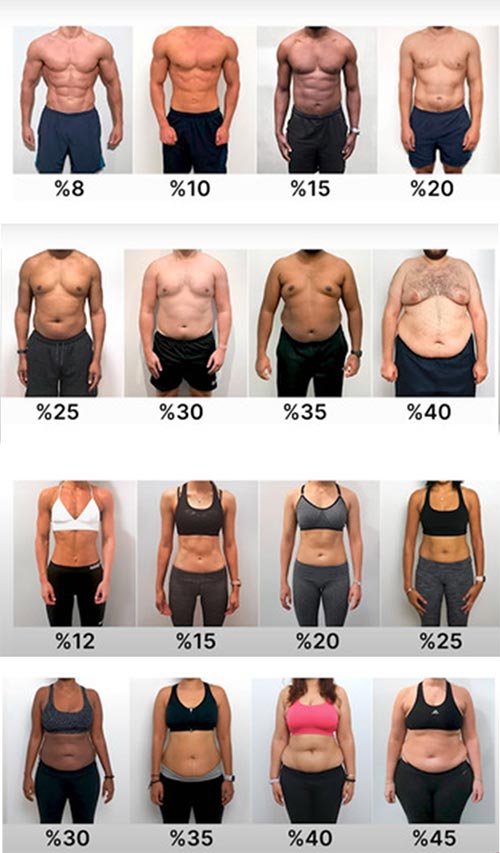
And setting up your diet is the most important step towards a normal body fat percentage. Training (you can choose via the link) is step number 2. Bone density - marker #2Yes, you can't determine the condition of your bones "by eye." This is done at a clinic on a special device (bone tissue mineralization is assessed). But! The problem is that we don't feel bone tissue loss at all. And only when we, God forbid, break a leg or arm from a light fall, that's when we understand that our musculoskeletal system has become somewhat fragile. And yet strong bones mean independent old age. What kind of nutrient deficiency must there be for the body to be forced to reduce nutrition to bones? Our bones are minerals (calcium, zinc, magnesium, etc.) and collagen. So don't neglect these supplements for the sake of being able to walk on your own feet in the future. Grip strength - marker #3This is generally an indicator that directly assesses your health. This is confirmed by both this study and similar ones. And here everything is simple: the stronger your grip, the healthier your old age will be (or the age period before old age). And for your grip strength to be significant, you need to train. At home or in the gym - doesn't matter. The main thing is to perform strength exercises. Just know that the stronger your grip, the much lower your risks of death from various causes (cancer, cardiovascular diseases, etc.). And if you can hang on a pull-up bar for 1 minute or even longer - that's a very good signal. Time it takes you to cover a mile (1.6 km) - marker #4By this time, you can determine the condition of your body: cardiovascular, respiratory systems and mitochondria (the body's energy stations). The faster you cover this distance (running or walking, if you're of honorable age) - the better your health and the lower your risks of death from various causes. But what if you don't run? Okay, you can ride a bike for 5 km. The point here isn't running or riding. The point is to assess your body's power and condition. If you run/walk 1.6 km in 8-10 minutes - that's a good signal for most people. If you ride 5 km on a bike in 10-12 minutes - similarly. Amount of fiber (dietary fiber) in your diet - marker #5The average person likely doesn't get enough fiber. If you analyze your diet, how many vegetables, fruits, legumes or grains do you eat per day? Some think that a salad of cucumbers and tomatoes is a ton of fiber. Actually, no. There's little there. But if you add cruciferous vegetables (white cabbage, Chinese cabbage, cauliflower, broccoli, etc.) to this salad, the fiber level in this salad increases sharply. For those who forgot, I'll remind you that fiber (dietary fiber) is nutrients that your gut's beneficial bacteria eat. And in the gut, roughly speaking, 85% of your immunity is concentrated (because of these beneficial bacteria). Moreover, fiber: - reduces risks of colon cancer development (cleanses it); - normalizes blood sugar spikes; - reduces inflammatory processes; - lowers food cravings (provides satiety for a long time, and fiber is considered the second most satiating nutrient after protein); - promotes weight loss, as it practically provides no calories but gives satiety. If you have 30-40 g of fiber in your daily diet - that's a good signal. Resting heart rate - marker #6This is an indicator of how efficiently your heart works. If your heart rate is elevated at rest - that's reason to worry. What will happen if you start moving? Will the heart start jumping out of your chest? If the heart beats frequently at rest, it means it needs to pump the usual volume of blood with increased force. Why? There can be many reasons. For example, weakness of the heart muscle: you don't exercise, so the heart isn't strengthened and has to beat more often to cope with normal work. With athletes it's the opposite: heart rate is slow because with each beat the heart pumps more blood ("athletic heart"). Or the reason could be the same visceral fat: it surrounds the heart, so there's less space for the heart itself in the chest cavity, but the same volume of blood needs to be pumped. How to do this? Beat more often.
SIMILAR ARTICLES
COMMENTS |