|
» »
I have a slow metabolism – an excuse for not losing weight
Author: Mikhail Ziborov - author of the site makefitness.pro. All articles by the author ➤
I have encountered people, both in real life (clients) and online, who claim they cannot lose weight due to a slow metabolism, i.e., their metabolic rate. They think their metabolism is so slow that everything they eat doesn't get digested properly and turns into fat. 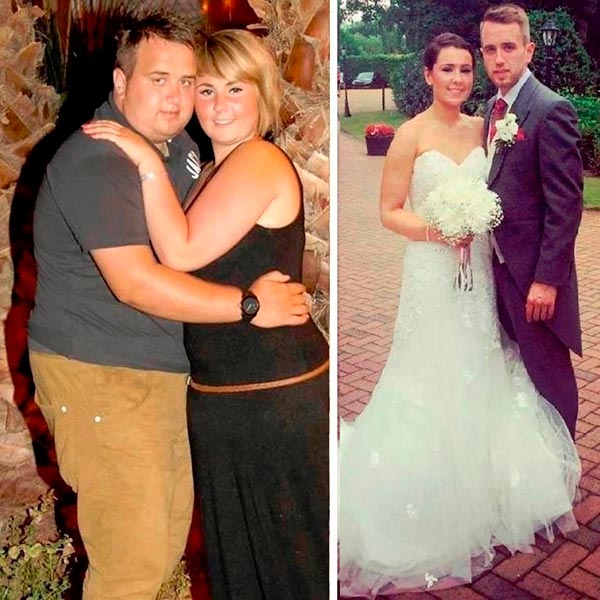
Another extreme is when they assert that they have too fast a metabolism, which prevents them from gaining weight. And my personal favorite is the excuse that obesity (or being overweight) is solely a hormonal issue and has nothing to do with the fact that a person simply eats too much, even if it may not seem that way to them. By the way, we often discuss such cases in our Telegram channel yourfit, where our subscribers ask their questions and receive specific answers. So, let’s delve into the topic of a slowed metabolism. Is a Slow Metabolism Real?Metabolism (also known as the metabolic rate) is a set of processes in the body where organs function, exchanging nutrients, energy, or acquiring/storing energy. Indeed, the metabolic rate has its speed and can speed up or slow down. However, these accelerations or decelerations are not significant enough to justify dozens of kilograms of subcutaneous fat. If a person did not consume excess calories, they would not gain weight even with a slow metabolism. Now, let's break it down. Metabolism consists of: - Basal metabolic rate or resting metabolism (the energy used by organs when the body is at rest, such as during driving or sedentary work) – accounts for approximately 60-70% of daily energy expenditure; - 20-30% of energy expenditure comes from non-exercise activity (house cleaning, walking to the store, etc.) – this is everyday activity or NEAT (more details in the link); - 10-15% of energy is expended during exercise when you are actively engaged in sports; - Up to 10% of energy expenditure comes from the thermic effect of food (how much energy is used by food for digestion and absorption). Even if you spend the entire day lying on the couch watching a series, and the only movement you make all day is a trip to the bathroom, you will still consume energy: the basal metabolic rate is at work, as your organs continue to function. Gradual metabolic slowing occurs from early childhood until about 20 years of age. After this age, the metabolic rate remains stable until around 60 years, after which it begins to slow down by about 0.7% per year. In other words, in a healthy person who does not suffer from metabolic diseases, metabolism is functioning normally. The main issue for most people is excessive food intake, i.e., energy from food. You see, subcutaneous fat cannot appear from nowhere. That’s unrealistic. If you don't believe it, just look at pictures of prisoners from concentration camps: those people ate very little, and there were no overweight individuals among them. Why? Were there not any cases of slowed metabolism among hundreds of thousands? In general, let's get specific now. Research on a Slowed MetabolismResearchers took individuals with the same weight and approximately the same ratio of fat to muscle in their bodies. After analyzing everyone, they found that metabolic rates among the participants differed by a maximum of 15%. Do you know what that means? It's about 200-400 kcal/day (depending on daily caloric intake). 200-400 kcal is not a huge amount: in a single meal, most people consume much more. Furthermore, what researchers uncovered by comparing the metabolic rates of lean individuals and those with obesity is quite interesting. It turns out that the metabolism of 10 lean women was the same as that of 10 women with obesity (the heavier individuals even burned nearly 100 kcal more per day). This is also confirmed by earlier research. But why were the lean individuals lean while others struggled with extra weight? The issue lies in the fact that, according to the study, overweight individuals sat more each day than lean individuals—by 2.5 hours—stood 2 hours less, and spent less time training. The researchers' conclusion: "Resting metabolic rate was not lower in women with obesity; however, they led a more sedentary lifestyle and expended less energy on physical activities than their lean counterparts. If women with obesity adopted the activity patterns of lean women, including changes in posture distribution, they could burn an additional 300 kcal each day." Here’s another confirmation from scientists that a sedentary lifestyle combined with high food intake leads to weight gain. In simple terms, if you’re overeating, you need to move more throughout the day to prevent gaining subcutaneous fat. The conclusion from the research: "Low levels of NEAT (Non-Exercise Activity Thermogenesis) are associated with obesity." 
I want to talk about those friends or acquaintances who eat everything and a lot but do not gain weight. Sorcerers and witches, no doubt. Meanwhile, just a whiff of a pastry can make us gain weight. But it’s much simpler than that. If people do not gain weight despite eating a lot, it means they are moving enough throughout the day to burn off everything they consume. Hence, their weight does not increase. A lot of movement throughout the day = high energy (caloric) expenditure = low body fat percentage. But do you know what’s most interesting about the phrase "I have a slow metabolism, so I'm overweight"? The most intriguing part is that people with more body fat actually have a higher basal metabolic rate. That is, if a lean person and an overweight person lie on the couch all day doing nothing, the overweight person will spend more energy at rest. This makes sense. The increased fat mass in the body requires blood supply, nutrients, and oxygen. To supply all of that, the organs have to work harder. This means more energy is expended. And if both the lean and overweight individuals get off the couch and start training, the energy expenditure will be higher for the overweight person doing the same exercises. Why? Because they weigh more; they have to lift more weight, which requires more energy. Training programs for lean and overweight individuals – all are illustrated here. ConclusionA slowed metabolism is no longer an excuse. The maximum difference between people regarding their metabolic rate is only 15%. That’s 200-400 kcal, which can easily be burned off or simply not consumed. Moreover, at rest and during movement, overweight individuals expend more energy than lean individuals. There’s no talk of a slow metabolism unless, of course, someone has health issues. In general, weight loss is more about how you eat than how you train. You can train lightly or not train at all, but if you eat properly, additional weight won’t accumulate. Or it will decrease if it has already stuck to you. In short, more details can be found in the link. SIMILAR ARTICLES
COMMENTS |