|
» »
What is blood pH and how does nutrition affect it?
Author: Knysh Vladlen - fitness trainer. All articles by the author ➤
There are various methods for strengthening health and maintaining overall physical fitness, at the very least. I will divide these methods into physically active and edible-vitamin. For each of them, one can create a lot of subdivisions, but today I will talk to you about one of them, namely the acid-base balance (ABB) of the body (pH). I partially remember an advertisement from childhood that constantly mentioned this mysterious pH. However, nobody explained what it is. What is pHThere are pieces of knowledge whose practical application can be called investments in the future. I believe that the topic of pH is precisely that. Very few people, athletes, and even doctors discuss it, and even fewer know anything about it. The metabolism of our body is based on acid-base equilibrium. When the balance is disrupted, it creates conditions for metabolic disturbances. Biochemical and glycemic processes are disrupted, which destroys the functions of the body. The ratios of acid-base balance (ABB) are built on two theoretical pillars: Acidosis (the lower the pH level, the more acidic the environment) - ACIDOSIS. Alkalosis - ALKALOSIS. 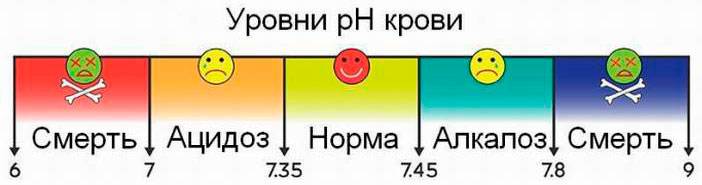
The main problem is that all diseases manifesting at the age of 45-50 and older, strangely enough, may be formed precisely from the level of ABB in the blood throughout life. Arthritis, arthrosis, chondrosis, stones, susceptibility to infectious diseases, gastrointestinal diseases (GIT), heart attacks... and there’s no end to this list of diseases. At first, it’s hard to believe, isn’t it? Let’s dig deeper. The more acidic the body, the more pronounced the pathological and functional processes, including cancer. Why? It’s simple and scientifically explainable: cancer (and infectious bacteria, accordingly) cells develop in an acidic environment, while they die in an alkaline environment. At a pH level of 7.4-7.5, cancer cells perish. This is the normal environment. And no pathogenic microflora can survive in an alkaline environment. ABB is characterized by a special indicator called pH (power of Hydrogen), which shows the number of hydrogen atoms in a given solution. A pH of 7.0 indicates a neutral environment. The lower the pH level, the more acidic the environment (from 6.9 to 0). An alkaline environment has a high pH level (from 7.1 to 14.0). 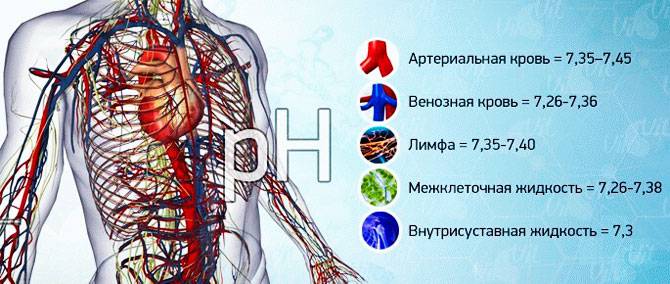
How Foods Affect Blood pHThere are several reasons for the increase/decrease in pH level, and nutrition is one of the main factors. We are used to dividing foods by their calorie content and macronutrient composition. Live and learn. From now on, we will divide foods into those that acidify our body, environment, blood – call it what you will, and those that alkalize. And here lies the biggest stumbling block: who would have thought (although if they thought, it would be clear) that our familiar foods, and even those that we equate with proper nutrition, are harmful to the body. Foods that cause acidosis: meat, fish, eggs, white bread, cheese, milk, tea, coffee, beer, vodka, lemon, sorrel, kiwi, cranberry. Acid-forming products, isolating carbohydrates, fats, and animal-based proteins. In Russian, this means products made from refined grains (I previously wrote an article on baked goods, high-grade flour, etc.), and animal products. All protein products, simple carbohydrates, and sweets significantly acidify the body. Increased blood acidity is a breeding ground for diseases. Fat. One of the factors for decreasing acidity is the accumulation of fat. Acidosis impairs thyroid function, which is responsible for metabolism. Hypothyroidism and metabolic slowdown are possible. Now you’re not just sick; you're also overweight. So what to do? We need to alkalize (linguists will fall when they read this). On another plate, we put foods that promote alkalization of the blood, specifically: potatoes, mushrooms, melon, watermelon, cabbage, beets, carrots, pears, grains, rice, buckwheat, corn and soybean oil, olive oil, honey. Fruits should always have their skins. Especially influential on the pH environment are parsley, dill, celery, and other herbaceous greens. It’s not worth going to extremes and throwing meat out of the fridge to become a vegetarian. There is a golden mean in everything and everywhere. This case is no exception. Describing all the processes – I wouldn’t have enough ink on my keyboard, remember the main thing – 1/4 acid-forming products to 3/4 alkalizing in your dishes, and health will be with you. P.S. We cannot influence changes in products on supermarket shelves - let’s accept this as the costs of civilization. However, we can change our habits and diet. Smoking, coffee, animal fats, fast carbohydrates, alcohol - "over-acidify" the body and provoke ailments, depositing as salts and fats at the intercellular level. Contacts of Vladlen (author of the article): facebook, VKontakte, instagram. SIMILAR ARTICLES
COMMENTS |