|
» »
Creating a training plan. Part 2: Periodization of workouts
Author: Novikova Diana - triathlon coach. All articles by the author ➤
This article will be relevant for those planning competitions and wanting to reach peak performance by the competition date. After setting our main and additional competition goals, we identify training periods. Strangely enough, what I’m about to write applies equally to both strength and endurance athletes, including runners, rowers, and even football players. It’s a universal system for any sport (except chess). The scheme is as follows: 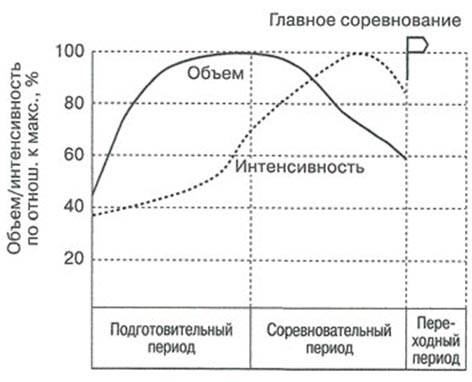
Some coaches start with intensity and then increase volume, but this method often leads to injuries, so I recommend the classic approach. This is a simplified scheme consisting of just 3 periods. In the preparatory phase, we prepare for the start; in the competition phase, we unlock our full potential; and in the transition phase, we take a break from this madness. The essence is that as we prepare for competitions, we begin to dedicate more time to sports. We reach the necessary volume in running. This could be in terms of mileage; for example, we gradually increase our running volume to 70 kilometers a week, and then add intervals and increase average speed. It’s that simple. To make this in a more convenient format, a 4-week alternation method is used, where for 3 weeks we gradually increase the load, and in the 4th week we significantly decrease it. This triggers our beloved supercompensation, and in the following cycle, we start again with better results and training capabilities, allowing us to increase intensity. It’s ideal for women if this coincides with their menstrual cycle. However, as the competition approaches, this rhythm should be adjusted so that the final rest week occurs before the important event. Another scheme: 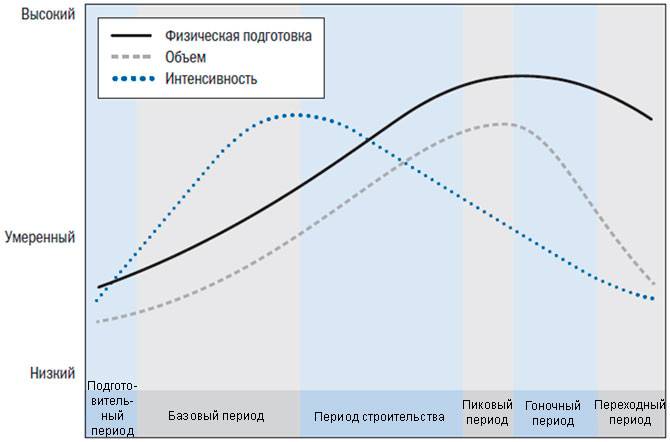
The idea is the same, but there are many more periods. Let’s examine: 1. Preparatory Period. Focus on general physical preparation, getting back from rest. 2. Basic Period – emphasis on strength, functional training, muscle mass gain, and joint strengthening. Men perform the bulk of their strength work during this period. Women in cyclic sports are advised to maintain strength training throughout the year but to decrease the volume after the basic period. Concurrently with strength training, we increase the volume. In preparation for long-distance events, this is where we build the primary endurance. 3. Construction Phase – this period focuses on increasing speed and intensity. The toughest work and intervals await us here. 4. Peak Period – a decrease in load leads to peak performance. 5. Racing Period – maintaining peak performance and competitions. 6. Transition Period – rest, which is essential for achieving an overall yearly supercompensation and starting the new preparatory phase with a solid base. Simple Rules of PeriodizationRule 1: Avoid Overtraining. If your pace drops, you feel fatigue, apathy, and don’t want to train, lower the load. By the way: Load = Intensity + Volume (now you all know this) The most obvious warning sign is when something starts to hurt. First a little, then worse, and you end up having to take a break from training because you’ve been pushing through. So, even with slight discomfort, it’s important to find out the cause and adjust your technique, do some general physical preparation (GPP), or get treatment. Rule 2: Increase the Difficulty After Adaptation. This applies to both intensity and mastering technique. For example, in swimming, you start performing flips after you can swim confidently. In running, you add hills when you've already mastered good technique on flat terrain. Rule 3: The More You Mobilize Your Body, the More Rest You Need. This means that loading weeks become increasingly challenging, while rest weeks become simpler. These are the main points for writing training plans over a long period. Of course, you can wake up every morning and train based on what your left leg tells you, but you will quickly hit a plateau in results or overtrain, depending on your persistence. Proper planning allows you to achieve great results with fewer training hours each week. However, creating a plan on your own is indeed challenging, as many nuances need to be considered, which is why it’s best for a coach to create the plan. Good luck and effective training! SIMILAR ARTICLES
COMMENTS |