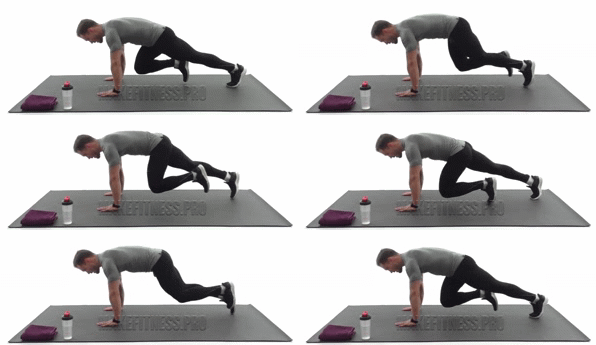
|
» »
Plank exercise. Various types of planks
Author: Mikhail Ziborov - author of the site makefitness.pro. All articles by the author ➤
I have already discussed in detail the well-known plank position, where you are resting on your forearms and toes. In this article, the exercise itself is described, along with its pros and cons, its purpose, and most importantly, who it is suitable for and who it is not. 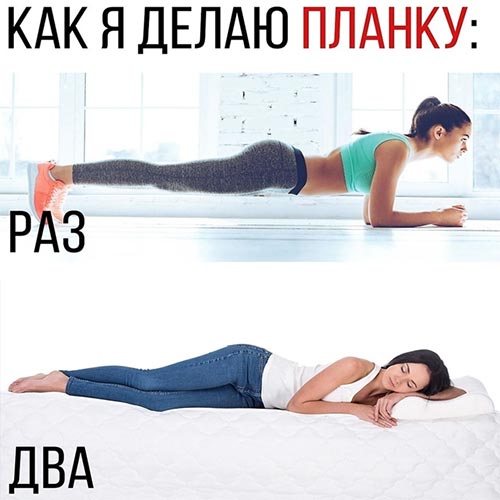
But the thing is, there are so many different planks with such varied purposes that it deserves a separate piece of content. Did you know about the plank with jumping jacks? It’s a plank where you jump! And did you know there is a Telegram channel where subscribers receive exclusively useful information related to fitness and nutrition daily? So, let’s discuss the exercise "plank" and its variations. Side Plank (Plank on the Side)
We balance on one hand and foot, engaging our core. This works the oblique abdominal muscles. There are various modifications of this exercise. For example, raising the pelvis in the side plank
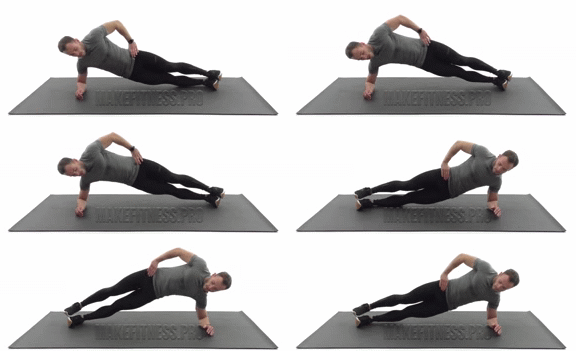 There is also the elbow-to-knee draw in the side plank: 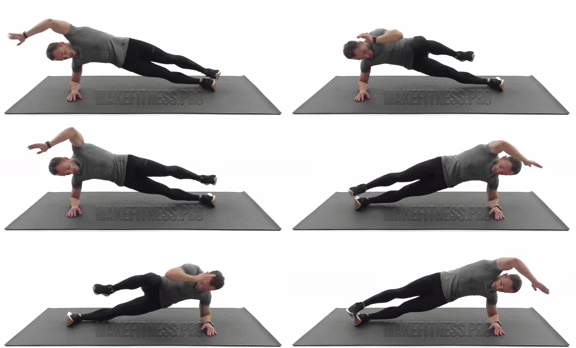 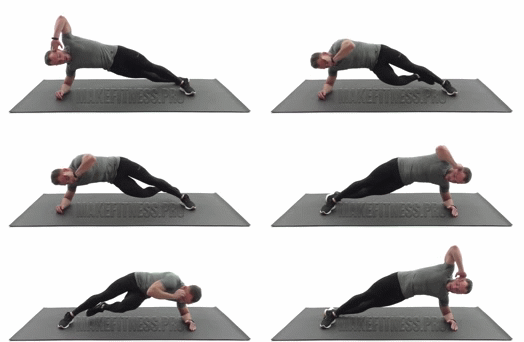 Another variation of this exercise is the side plank with torso rotation, 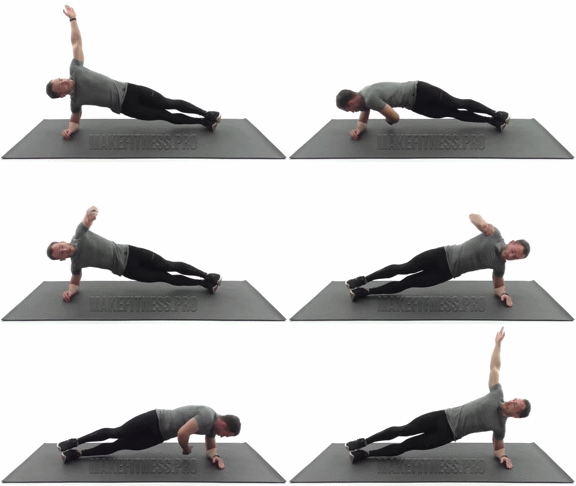 All of these exercises target the abdominal muscle group, i.e., the abs and obliques. But if you do leg abductions upwards in the side plank, 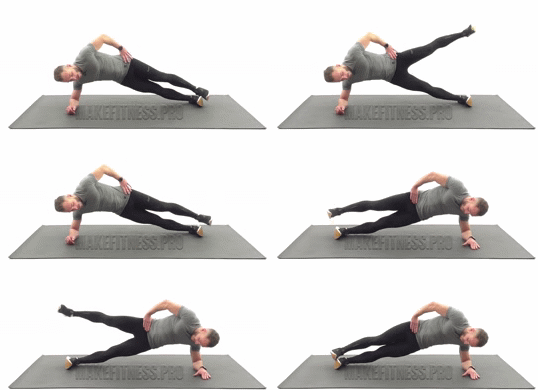 Leg Swings in Plank (in Prone Position)You simply hold the plank position (but on your hands instead of on your elbows, as is usually done) and raise one leg up. The leg should be straight. Lower it, then raise the other leg. The next variation is leg swing up in plank with knee tuck. 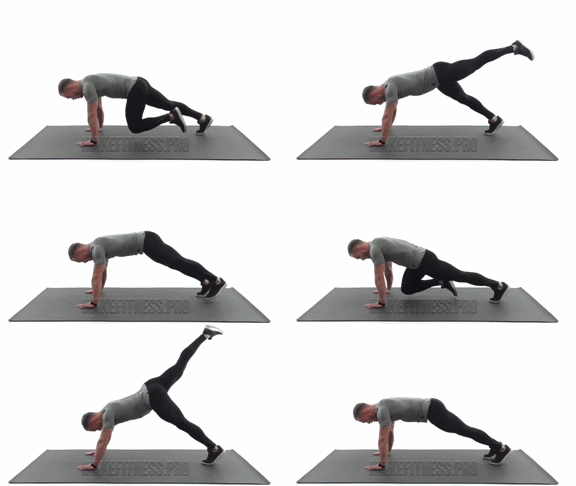 Raising a Straight Arm Up in Plank 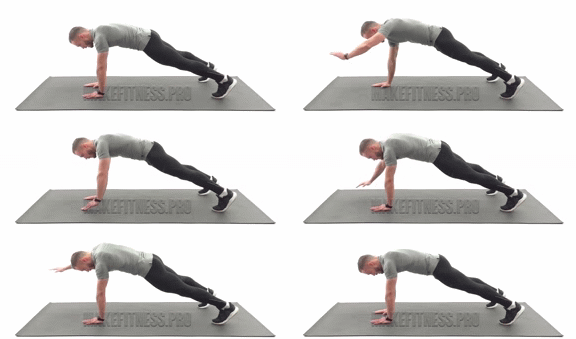 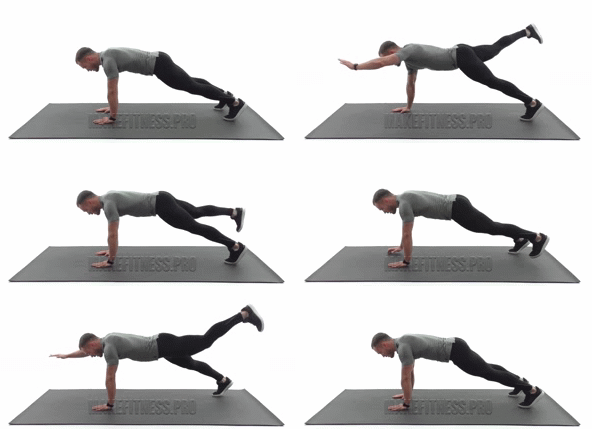 These exercises not only work the abdominal muscles but also the leg muscles, and in the last exercises, the shoulders and scapulae are targeted. Classic PlankBut we will not discuss the simple static plank but rather its modified variations. For example, plank with knee tucks to the side 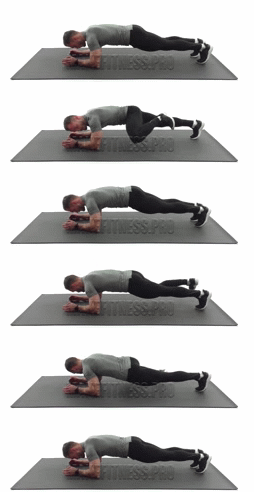 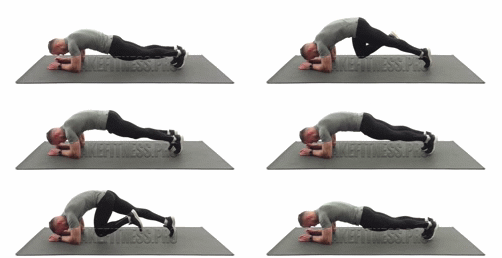
One particularly noteworthy exercise is the "mountain climber."
There is also the pendulum plank. 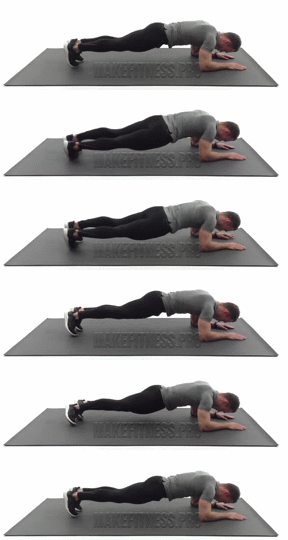 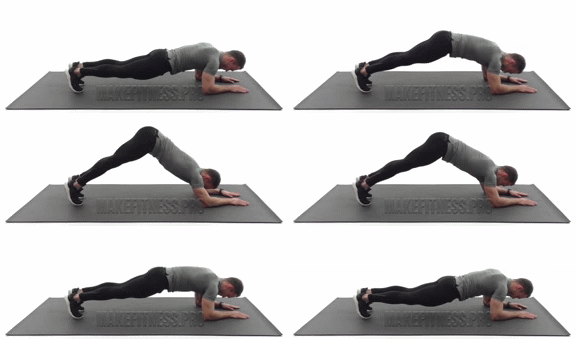 To strengthen the upper shoulder girdle, not just the abs, you can use the changing hand position in plank. 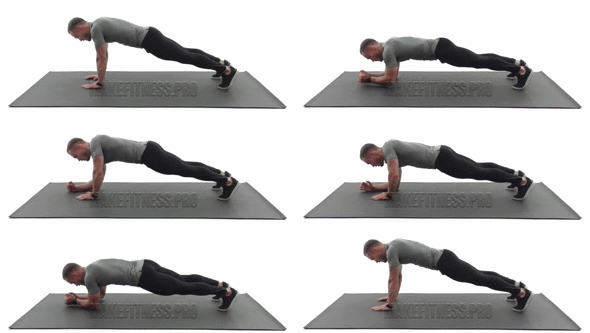 Finally, an unconventional exercise mentioned at the beginning – jumping jacks in plank. 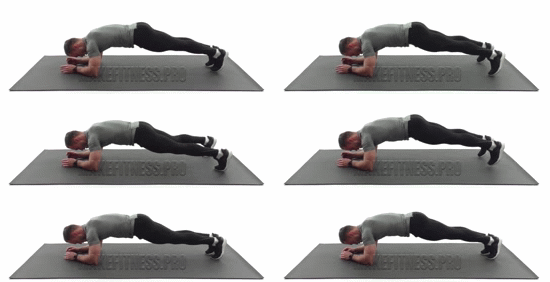 For those who want to achieve real results in weight loss or body shaping, I recommend approaching the issue comprehensively, rather than relying on half-measures like doing various planks. In this section of the website, you will find free workout programs for any goals, and in this section – a nutrition plan with a ready-made menu. If needed, here is the article "Exercises for a Flat Stomach", just in case. Reverse PlankThis is a position in which you are facing up rather than down. Sit on the floor, place your hands behind you for support, and lift your body, keeping it straight on your hands and heels. Your legs and torso should be aligned (straight). This is the reverse plank. 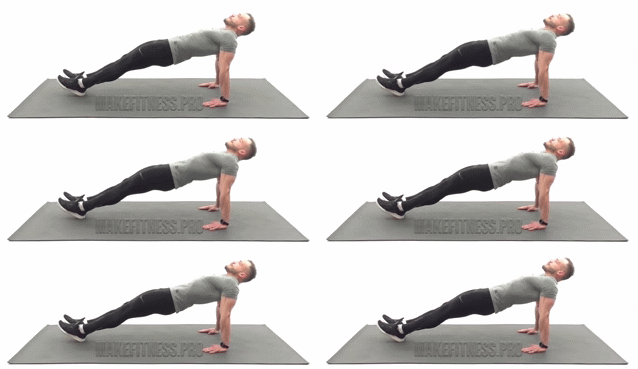 The dynamic version of this exercise is the hip lift in reverse plank, where you lower your hips to the floor, but do not sit down, just touch your glutes to the ground and then lift up again. These exercises target strengthening the gluteal and lower back muscles, as well as engaging some core muscles. SIMILAR ARTICLES
COMMENTS |