|
» »
43 variations of the plank exercise for the whole body
Author: Zavitnevich Evgenia - a Master of Sports in gymnastics and an aerobics coach. All articles by the author ➤
Are you tired of simple crunches, boring shoulder lifts while lying down, or mundane side bends? Do you not feel the load, or do you find it uncomfortable to perform standard exercises? I suggest various exercise options, all based on the "PLANK." The plank is a universal exercise that strengthens various muscle groups while simultaneously targeting the waist, glutes, legs, and arms. Whether to perform the plank statically or dynamically depends on your training goals. Executing the static variant of the plank with high tension (as much as you can) increases muscle volume and strength. This targets the white muscle fibers. Alternating with dynamic exercises affects the red muscle fibers, leading to the active release of energy from fat (i.e., fat burning). The variety of exercises will prevent boredom. Moreover, as one exercise can engage several muscle groups at once, the training effectiveness will be high! By modifying the plank and integrating it into almost every strength training session, as well as body&mind workouts (pilates, yoga), you can significantly enhance your routine. ATTENTION! It is crucial to keep your palms or elbows under your shoulders and to avoid arching your back. Exhale during the most challenging moment (in dynamic variations). The plank is contraindicated for individuals with shoulder issues, wrist problems (you can perform it on your elbows), and lower back pain. Do not attempt all exercises at once; diversify your workouts! The static variant of the "plank" should be held for anywhere from 8 seconds to 2 minutes. A slight pelvis rocking or a double variant will increase the load. 1. Classic plank on straight arms or on elbows. 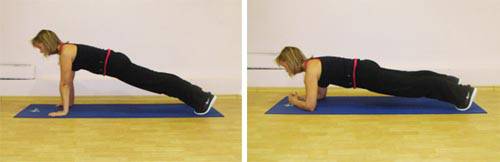 2. Plank on knees on straight arms or on elbows. 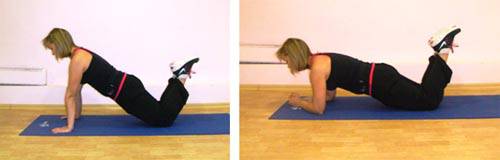 3. Plank from a fitball on straight arms or on elbows. 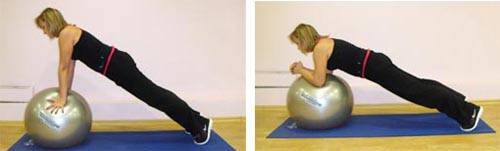 4. Plank with feet supported on a fitball (bench) on straight arms or on elbows. 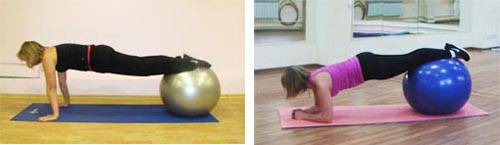 5. Side plank (can be done with support on the knee). 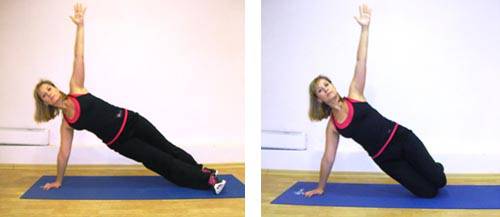 6. Side plank on elbow (can be done with support on the knee). 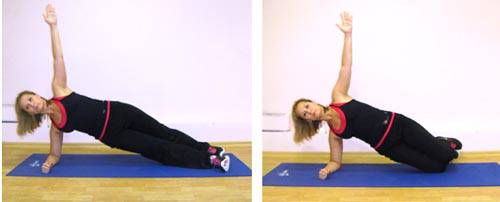 7. Side plank with feet supported on a fitball. 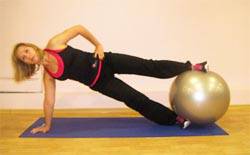 8. Reverse plank (Purvottanasana). 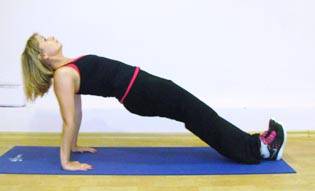 9. Transitions in a circle: Plank - side plank - reverse plank, etc. 10. Four-point plank (Chaturanga Dandasana). 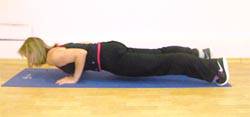 The following exercise options can be performed with elbows supported, with hands on an unstable surface, or with feet on a ball. The recommended number of repetitions is from 8. You can alternate leg movements in different directions or perform double rockings, as well as do it in static hold. Additionally, lifting the leg back targets the glutes and hamstrings. 11. Lifting straight or bent leg back. 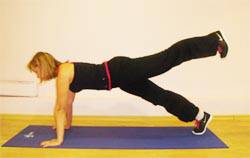 12. Lifting the leg back with a circular rotation. 13. Lifting and moving the straight or bent leg to the side. 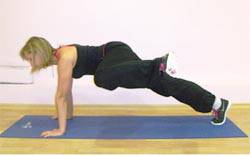 14. Bending the leg to the chest (leg suspended). 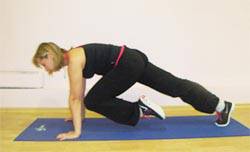 15. Bending the knee to the opposite side + straightening the leg. 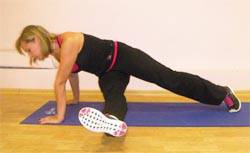 The plank can additionally work the arms and back. Exercises can be performed on straight arms or elbows, with feet on an unstable surface. The number of repetitions and weight of dumbbells will depend on your physical fitness level. 16. Plank with arm extension backward. 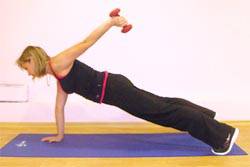 17. Plank with swinging arm to the side (straight or bent). 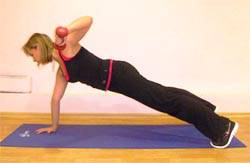 18. Reaching one arm forward or to the side. 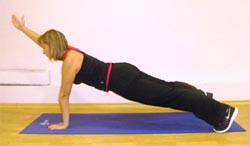 19. Reaching the arm forward + lifting the opposite leg. 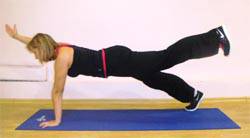 20. Lowering to elbow and raising to straight arms. 21. Classic push-ups with various hand placements (wide, narrow, etc.). 22. Push-ups from a fitball. 23. Push-ups with feet on a fitball (alternating with planks, 8 reps each). 24. Bending the legs and bringing them to the chest. 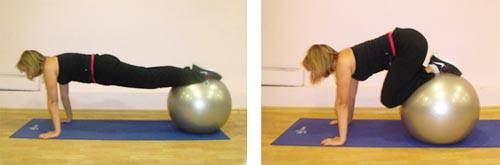 25. Exiting the plank with the hips up. 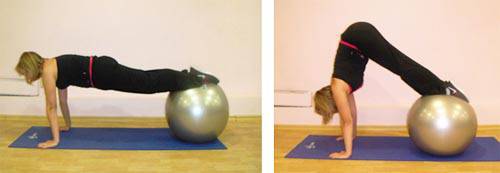 The oblique muscles are primarily worked through the side plank, but variations can also be performed from the classic position on straight or bent arms, as well as on the knees. 26. Lowering the hip (twist). Shoulders remain still. 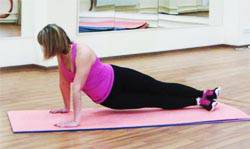 27. Circular movements of the hips (do not arch!). 28. With support on one hand. Straight arm abduction with a torso rotation (hips stayed in place). 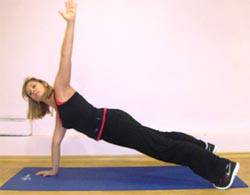 More intense movements can be done as separate exercises or in the form of supersets, alternating them or combining with other exercises (squats, lunges, etc.). The duration and the number of repetitions are individual but should be at least eight counts. For example:
29. From plank position, lift the hips into the "downward dog" position. 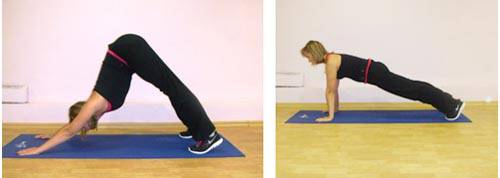 30. Small running (feet narrow or wide). 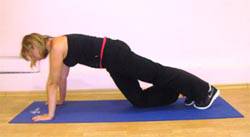 31. Wide lunges. 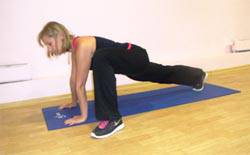 32. Skipping walk (or switching legs with a jump). 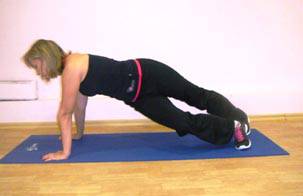 33. Side step in plank. 34. Jumping with legs apart, jumping with legs together. 35. Jumping into a squat position, jumping into a plank position. 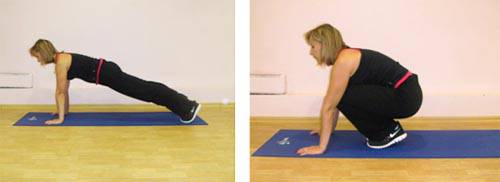 36. Transitioning to a reverse plank without lifting the hands off the ground (between the hands). In the side plank, the obliques and hips are effectively worked. You can perform this on your elbow or knee (which makes it easier). Start with 8 repetitions. If it feels easy, you can do double movements or rockings for 8 counts. 37. Side plank with lowering the top arm (twist). 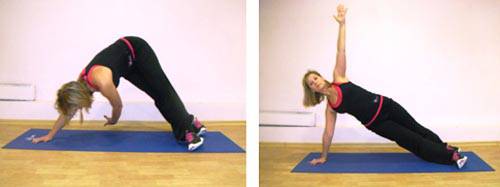 38. Lowering the hips down and raising them up. 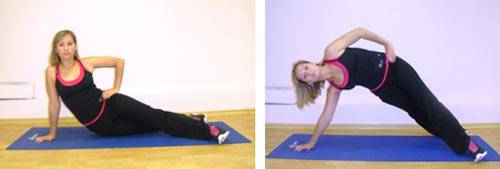 39. Abduction and lifting the leg to the side and forward (straight and bent). 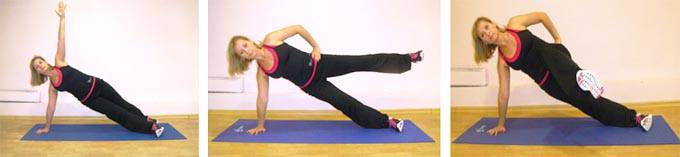 40. Circular movements with the leg from the side plank. From the reverse plank, you work almost the entire body. 41. Lifting bent and straight legs (holding for 2 to 8 seconds) + abduction to the side. 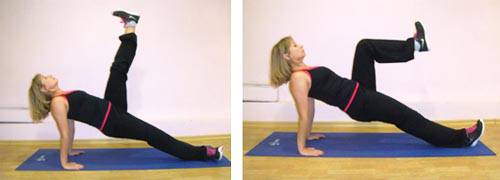 42. Lifting the hips (double movements). 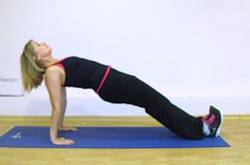 43. Circular movements of the hips in any position from the plank. Don't forget about stretching after strength static exercises!
SIMILAR ARTICLES
COMMENTS |