|
» »
Static exercises at home: how and why to perform
The article is provided by the website Gotodance. Static exercises are those performed without movement of body parts. Nevertheless, they put a significant load (tension) on the muscles and ligaments. Static exercises allow you to significantly strengthen and develop ligaments, and they are used for increasing muscle strength; however, they provide little to no increase in volume. The well-known Russian strongman, Alexander Ivanovich Zass, "Iron Samson," developed his strength through static exercises but had to include weighted movements in his training to build mass. The public simply could not believe that such a small athlete, without huge muscles, could bend iron bars, break horseshoes, and carry horses on his back. Strengthening Ligaments – The Foundation of StrengthLarge, well-developed muscles are undoubtedly impressive. However, their size is not a direct indicator of strength, and often a person with smaller muscle sizes can surpass larger athletes in strength. Static exercises are designed to develop the strength aspect of our muscles. Furthermore, during their execution, significant fat burning occurs. Typically, these exercises are performed with a specific hold of the tensed state. The duration of this hold is a subject of heated debates and discussions among various trainers. The most optimal time for developing strength is 20-30 seconds, while for fat burning, it is 40-45 seconds. Advantages of Static ExercisesThe main advantage is their simplicity and accessibility. No expensive equipment or sports inventory is needed to perform "static" exercises. In most cases, your body weight is enough. When performed correctly, static loads significantly exceed dynamic ones in terms of effectiveness. Including such exercises in your routine can help you achieve an excellent figure, improve posture, and relieve pain in the back and spine. Who is Recommended to Use Static ExercisesFirst and foremost, static exercises are recommended for those who, for various reasons, cannot perform dynamic movements. This especially applies to individuals who have suffered various joint injuries and spinal issues that restrict movement. Additionally, "static" exercises are excellent for office workers and managerial personnel. These exercises can even be performed during the workday. Simple techniques can quickly strengthen back muscles, improve blood flow in the legs, alleviate stress, and enhance mood. Complex of Static ExercisesExercises for the Arms 1. Biceps. One end of the chain or belt is pressed to the floor with your foot. The other end is gripped in your hand. Then, bend your arm at the elbow in front of your chest until it reaches a 90-degree angle. At this angle, the chain or belt should be tense. Then, apply effort trying to stretch the belt with your bicep strength. Hold the tension for about 30 seconds. Gradually release the tension, then repeat with the other arm. 2. Triceps. Start position: arms extended in front of the chest with the belt gripped. Begin stretching the belt with your hands, reaching maximum tension in the triceps. Hold for 30 seconds. Exercises for the Chest 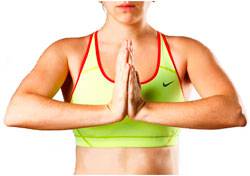
Start position: hands together in a praying position in front of the chest. The elbows should be spread clearly to the sides, with the shoulders lowered. Begin to forcefully press your hands together. You may feel trembling in your hands. Maintain maximum tension for 20-30 seconds. Exercises for the Back 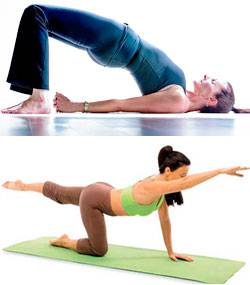
1. Start position: lying on your back, arms extended along the body, legs bent at the knees. Pushing with your feet against the floor, lift your hips off the ground. Your back and hips should form a straight line. Hold this position for 40-60 seconds. Gradually lower your hips to the ground. This is an excellent exercise included in the complex of therapeutic physical education. 2. Start position: kneeling with hands on the floor for support. Raise one arm and the opposite leg until they are parallel to the floor. Hold this position for about 40 seconds. Gradually return to the starting position. Switch arms and legs and repeat the exercise. Exercises for the Abs 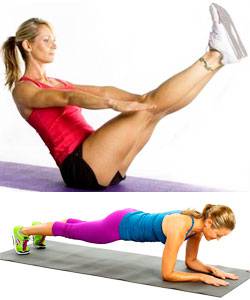
1. Start position: lying on your back, legs straight, arms along the body. Raise your straight legs and body, keeping the angle between your body and legs around 90 degrees. Hold this position for about 30 seconds. 2. Plank – lying on your stomach, with elbows bent and resting on the floor. Maintain this position for about 60 seconds. Exercises for the Legs and Glutes 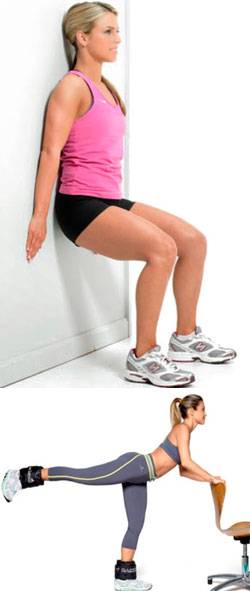
1. Start position: standing with your back to the wall. While touching the wall with your back (without leaning against it), squat until the angle in your knees is 90 degrees. Hold this position for about 30 seconds. Gradually rise back up. 2. Start position: standing next to a chair and leaning on the back of the chair. Extend one leg back until it is parallel to the floor. Hold this position for 30 seconds, then slowly lower your leg. Switch legs and repeat the exercise. ConclusionStatic exercises are best performed as a complex. This is when they are most effective. Additionally, attention should be paid to breathing during execution. Breathing should be calm (without the pumping effect), with a short inhale through the nose and a long, relaxed exhale. SIMILAR ARTICLES
COMMENTS |