|
» »
Anti-vitamins: benefits and harms
Author: Mikhail Ziborov - author of the site makefitness.pro. All articles by the author ➤
Engaging in gym workouts, home workouts, or not exercising at all, women, men, children, and the elderly—everyone needs vitamins and minerals. You can find a lot of information about vitamins online (most of it is repetitive). But have you heard anything about antivitamins? In this material, I will tell you about them. From this article, you will learn:
What Are AntivitaminsAntivitamins are organic compounds, substances that are very similar (but not always) to vitamins and vitamin-like substances. These compounds, when looked at from a chemical structure perspective, are almost identical to specific vitamins. Typically, they either contain extra atoms (or entire groups) or, conversely, are missing some. They possess the property of suppressing the biological activity of vitamins. Structurally, antivitamins are similar to vitamins and differ from them by the absence or additional presence of an alkyl or some other functional group in the molecule. Sometimes the structural similarity is quite remote, for example, among vitamin K antivitamins. Like antimetabolites, antivitamins can replace the true catalysts—vitamins—used in biocatalytic reactions, which display their catalytic functions as part of enzyme systems. It is possible that antivitamins can enter the active center of enzyme systems (competitive inhibitors) or interact with the polypeptide chain in another way, forming pseudoenzymes that lack biocatalytic functions but can suppress the biocatalytic activity of true enzymes that contain vitamins as a result of their configuration, or displace vitamins from enzyme systems. To suppress the vitamin properties, large amounts of antivitamins are generally required. Many antivitamins are of significant importance in medical practice and are used to treat certain diseases. Antigrowth substances from microorganisms are widely used to treat diseases caused by pathogenic microorganisms. Compare the chemical structure of the vitamin-like substance para-aminobenzoic acid (vitamin B10) and its antivitamin—sulfanilamide. Don't they look similar? 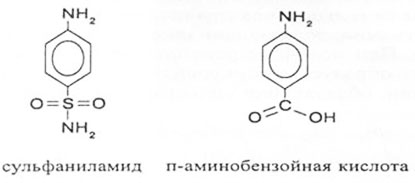
The thing is, the body does not have a precise determinant of whether a substance is a true vitamin or something else. If one could put it this way, the body "thinks" as follows: "Aha, here is a substance that looks like something I need; I’ll incorporate it into my metabolism." And it incorporates it. However, it turns out that the substance cannot perform the same functions (does not have vitamin activity) as its counterpart—a true vitamin. As a result, there is a disruption in metabolic processes. However, substituting vitamins with antivitamins is not the only way they influence the body. How Antivitamins Affect the Body:There are actually many ways in which antivitamins can influence the body: Replacement of Vitamins. The general scenario was described above. However, it should be said that it is not the vitamins themselves that are replaced, but their activated forms—coenzymes (cofactors). For example: sulfanilamide replaces vitamin B10 (PABA). Binding. Let's take a chicken egg. In the raw egg white, there is avidin—an antivitamin for vitamin B7 (biotin). Biotin itself is located in the yolk. When you consume a raw egg, the stomach mixes everything into one food mass, and avidin binds to biotin (making it inactive and unable to perform its functions). One molecule of avidin can bind four molecules of biotin. However, you can easily counteract this by boiling or frying the egg. The denaturation of the protein and the heat destroy avidin. Destruction of Vitamins. Sometimes vitamins themselves act as antivitamins against their counterparts. For example, vitamins B2 and B3 can destroy thiamine—B1. Therefore, if you are taking dietary supplements, make sure to take these vitamins separately (about 1.5-2 hours apart). If you have a vitamin-mineral complex that is essential for training, look for one that has a Timed Release system, where vitamins are released gradually without competition. Alternatively, ensure that vitamin B1 is in a higher quantity. The more of the substance, the greater the retention and absorption. Consider ascorbic acid as well. L-ascorbic acid is the well-known "ascorbate," while D-ascorbic acid is its similar sister that destroys the former. Enzymes can also act as antivitamins: thiaminase (present in certain types of fish) destroys thiamine (B1), and ascorbate oxidase affects vitamin C (both are found in the same fruits and vegetables). "Displacement" of Vitamins is quite similar to replacement. In the first case, the antivitamin occupies an unoccupied position, while in the second, it comes in and arrogantly takes the chair from the vitamin that is sitting on it (because it is stronger). To put it simply, these positions and chairs refer to specific sites in the enzyme structure. Suppression. Here, everything is straightforward: the vitamin has a certain effect on the body, and the antivitamin removes that effect. Examples include dicumarol counteracting vitamin K (which thins and clots the blood, respectively), and aminopterin reducing tumor formation, while vitamin B9 (folic acid) promotes it. The same happens with enzymes. For example, dicumarol suppresses the enzyme that regenerates vitamin K. 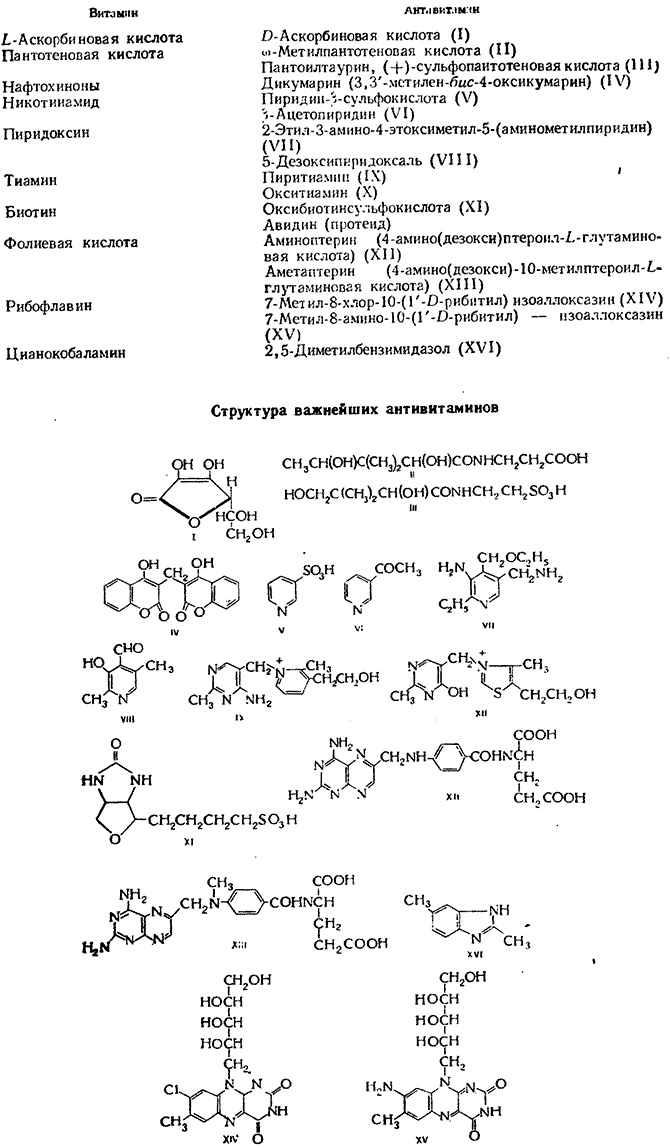
What Are Antivitamins Used ForIn fact, they can be very useful. Suppose you've overdone it with a certain vitamin and are on the verge of poisoning. A doctor gives you an injection of its antivitamin, and everything is resolved. Or perhaps your blood is too thick for some reason (too much vitamin K, not drinking enough water, etc.). The doctor gives you an injection of dicumarol, warfarin, or phenindione, which counteracts vitamin K, making your blood thinner. You are saved. Other substances have found their place as antibacterial and antimicrobial agents—such as sulfanilamide. Some can slow the growth of cancer tumors, like methotrexate. Isoniazid (an antivitamin for B3) and cycloserine (antivitamins for B9 and B12) are used to treat tuberculosis. The discovery of vitamins has played an exceptional role in the prevention and treatment of many infectious diseases. Since bacteria also need the presence of many vitamins for the synthesis of coenzymes to grow and reproduce, introducing structural analogues of vitamins—known as antivitamins—into the body leads to the death of microorganisms. Antivitamins generally block the active sites of enzymes by displacing the corresponding vitamin-derived coenzyme, resulting in competitive inhibition of the enzymes. Antivitamins include substances that can induce a classical picture of hypo- or avitaminosis in animals after administration. The primary area of application for antivitamins is in pharmaceuticals and medicine. Moreover, some antivitamins are specifically synthesized for use in cases of vitamin overdoses. ConclusionIf after reading this text you are now afraid of overdoing it with antivitamins, I assure you—one needs to consume them regularly and in large quantities, which is quite difficult with adequate nutrition (not eating raw eggs, for example). SIMILAR ARTICLES
COMMENTS |