|
» »
E-additives in foods. Should you be afraid of food additives?
Author: Mikhail Ziborov - author of the site makefitness.pro. All articles by the author ➤
Tell me, are you afraid of vitamin C, vitamin E, and citric acid? What about those "E" numbers like E300, E306, and E330? They look daunting. But these are the same substances, just with a number label under the letter "E" (from the word Europe). Well, does sodium benzoate (E211) in food products scare you? Then, by all means, don't eat berries like cranberries, blueberries, and cloudberries: they are full of this sodium benzoate (even though they seem like natural products, right?). There will be those who say that E-additives are just chemicals. Yes, some E-additives are obtained synthetically, i.e., through chemical reactions. But the thing is, our body does not distinguish whether the molecule before it is natural or artificially created. It sees that it is vitamin C, takes it, and uses it for its needs (it doesn't matter if the vitamin is derived from an orange or created in a factory). The same goes for E-additives. For the body, there is no difference, whether citric acid is obtained from a lemon or produced in a factory and labeled E330. And lastly, does dihydrogen monoxide sound scary? This substance is not an "E" additive. So, is it scary or not? It's just the scientific name for water. Do you understand where I'm going with this? Join us on our Telegram: there you will find a lot of interesting, useful, and exclusive content. Subscribe and learn when there are discounts at iHerb, how to lose love handles and belly fat faster, or how to build the muscle you’re interested in (glutes, biceps). The Impact of E-Additives on the Body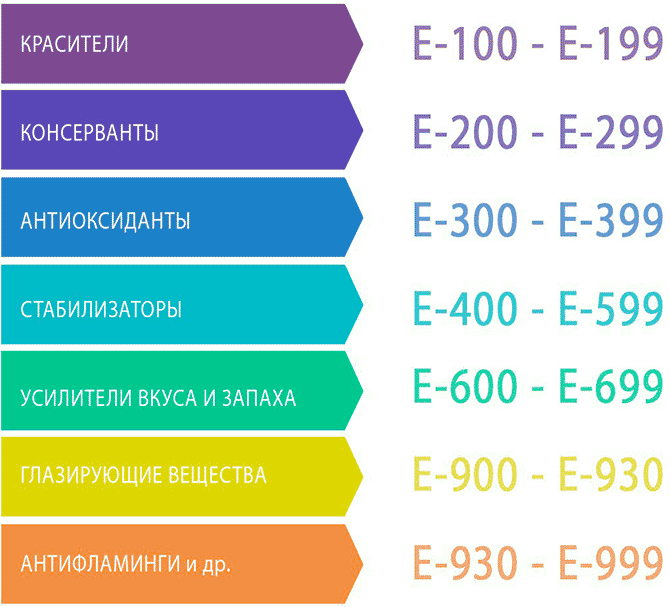
E-coded additives are substances necessary for something in the product. They won't just add it to the product for no reason. Moreover, putting in more than necessary makes no sense; it's expensive. And exceeding the safe dose is prohibited by law (if they check and find more, you’ll be in trouble). For example, antioxidants are added to prevent the product from oxidizing, going rancid, and spoiling, in short. Stabilizers and emulsifiers are needed to create structure; otherwise, the product will separate and fall apart (not appetizing at all). Preservatives are needed to prevent the growth of bacteria and other microorganisms. You wouldn't want to eat something moldy, would you? By the way, do you know why regular berries and fruits that grow in the wild are full of various E-additives or preservatives? Plants protect themselves from being eaten by microorganisms. Regarding the effect on the body: actually, all E-additives have been tested hundreds of times and are recognized as safe! This is confirmed by research. The harm of E-additives is talked about on television, in various media, and in many blogs and social networks. Trusting some random person on Instagram while distrusting scientists - well, that's questionable. I’ll put it this way. The dosages of each E-substance are already well-known – how much can be consumed without harm, how much is not allowed, and which ones should not be added at all. The danger of E-additives lies not in the additives themselves but in their quantity. You can get poisoned by anything. You can overdose on any substance, even water. Vitamin C or E – they are beneficial. But eat more than the allowable dosage, and you’ll experience side effects. The same is true for E-additives. If we follow the logic that all E-additives are chemicals and undoubtedly dangerous, then under no circumstances should you eat... well, anything at all. After all, cabbage and spinach contain a lot of sodium nitrate – E251 (even many times more than is permissible to add to products in manufacturing). And regular carrots have a lot of E160 – a coloring agent or beta-carotene (which is also vitamin A). 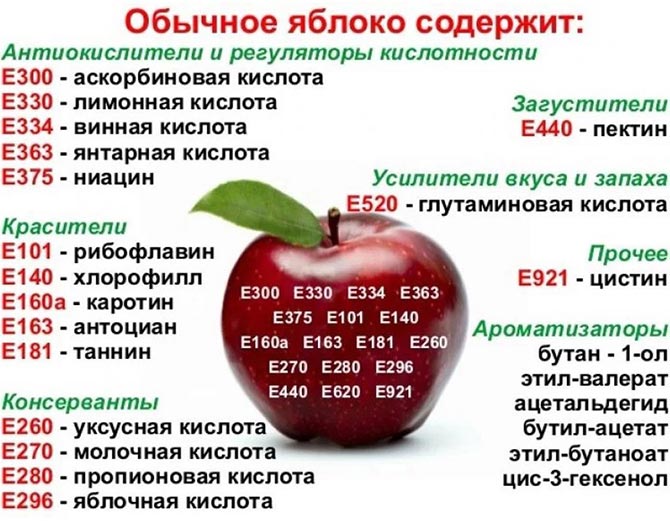
In short, E-substances are present in food products, regardless of whether the product is of natural origin (like that tomato from grandma's garden) or processed cheese (created in a factory with 5-10 E-additives). You won’t be able to avoid consuming them in your food. No way. Now, someone might say that by giving up certain products with E-additives, we can at least reduce their quantity in our diet. Like, fewer products with E-additives means fewer E-additives consumed. Well, yes, sure. If you don’t get E-substances from one product (like from some canned goods), you’ll definitely get those same E-additives from other, completely natural and organic products. You can read detailed information about individual E-substances through the links on Instagram. There, a food technologist reveals the "harmfulness" of each E-additive. E171 – titanium dioxide (coloring agent) Also, in Olga's profile, there is information about monosodium glutamate, sodium nitrite, and other so-called scary substances for those who believe in the harmfulness of E-additives. By the way, do you use sports supplements? Well, vitamins or other dietary supplements? Through the link, you can find a detailed guide on each supplement you might be interested in: - vitamins and minerals; We spent many evenings and a whole pack of coffee writing about the benefits of these dietary supplements for you. Come check it out – learn what to take, for what purpose, how much you need, and where to buy at a 20-25% discount. Nutrition plans for confident fat loss – here. For mass gain – here. Workout programs with the best effectiveness – here. SIMILAR ARTICLES
COMMENTS |