|
» »
What foods are necessary for excess weight?
Author: Mikhail Ziborov - author of the site makefitness.pro. All articles by the author ➤
Do you know why, after eating at McDonald's or similar fast-food restaurants, you feel hungry again in just an hour? Because such food provides a lot of calories but doesn't satiate: the feeling of hunger may pass, but it quickly returns. Shawarma dulls hunger a bit better, as it contains more ingredients that are high in fiber (cabbage, cucumbers, tomatoes). In burgers, there’s just a leaf of lettuce and a couple of thin cucumber slices. In short, this kind of food is energy-dense but doesn’t provide fullness. In our Telegram, we periodically post lists of various products: the lowest calorie, highest calorie, those with the most fiber, or protein. So, subscribe and make use of our findings. Energy Density of FoodsEnergy density of food is an indicator of how much energy (calories) is present in a certain product. A simple example: 100g of chocolate and 100g of regular white cabbage. By weight, both products are equal. But in terms of calories – they are not. In chocolate, there are about 500 kcal per 100g. In cabbage, there are about 25 kcal per 100g. The difference is obvious. Chocolate is an energy-dense product (it packs a lot of calories into a small weight), while cabbage is an energy-sparse product (it contains few calories for the same weight). Why is this talk about calories at all? Well, the main reason for weight gain is none other than simply overconsumption of calories: a person consumes more energy in a day than their body needs for all its activities. Consequently, the body stores the excess energy as subcutaneous fat. For God's sake, please do not bring up examples of people gaining weight due to certain diseases. These are special cases. Most people with excess weight do not have metabolic diseases: subcutaneous fat is simply due to people eating too much. That’s it. Here’s an article about how many people make excuses for not losing weight, justifying their excess weight with a slow metabolism. And here's an example of dishes with the same energy density (460-480 kcal). Guess which one will keep you satisfied longer – coffee or a full meal? Although you get the same number of calories in both cases: 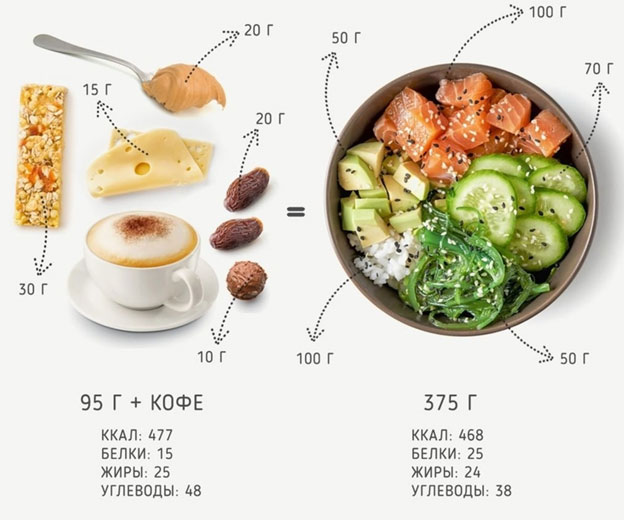
What to Eat When Overweight if You Want to Lose Weight
When overweight, energy-sparse products are needed, i.e., those that carry few calories (energy). Such products include (per 100g of product): By the way, our developed nutrition plan (ready menus for each day considering calorie content and macros) is based on energy-sparse products: they provide few calories but fill you up. This way, you lose weight without constantly feeling ravenous. Of course, this is not all the products with low energy density. In general, you can take all green vegetables and greens, low-calorie fruits like citrus, and prepare hearty but not overly caloric dishes based on them. For example, here’s a lunch: 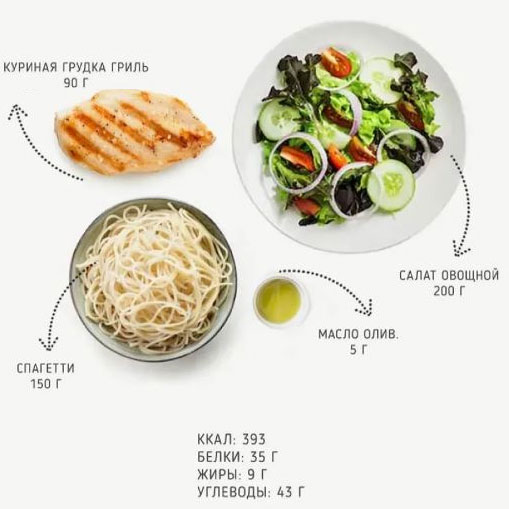
If you analyze the presented meal, you get everything necessary (proteins, fats, carbohydrates, and even fiber), satiate yourself for a long time, but you don’t consume too many calories. This will allow us to reduce excess weight. You can find complete menus for each day in our nutrition plan here. Why Low Energy Density Foods are Necessary for Losing WeightIt's obvious. You feel full but don’t get many calories. Due to the lack of calories, the body, to continue functioning, is forced to draw energy from subcutaneous fat. That’s how a person loses weight. But the problem for those losing weight is that they either overconsume calories (which means there’s no point for the body to burn its reserves) or suffer from hunger (which leads them to break down and overconsume calories again). Energy-sparse but filling products help solve these problems. SIMILAR ARTICLES
COMMENTS |