|
» »
Glutamine amino acid – its role in sports
Author: Timko Ilya - master of the whole project and fitness trainer. All articles by the author ➤
Glutamin (also known as glutamic acid) is perhaps the most popular amino acid among athletes, and not just weightlifters. Its effects are universal and beneficial in all sports. It constitutes 25% of the total amount of all (essential and non-essential) amino acids in the body. Recently, 3 million tons of glutamic acid amino acid are produced annually. This amino acid is sold in its pure form in any pharmacy and any sports nutrition store. Additionally, it is often added separately to various protein supplements. What causes such demand for it? The fact that it is quite inexpensive while possessing a number of beneficial properties, the main one being increased performance. How does this happen? It is known that glutamine plays a role in the synthesis of other amino acids. In fact, glutamine accounts for more than half of the amino acid synthesis in muscles. In other words, most amino acids in muscle tissue are produced from glutamine. It is easy to deduce that the more glutamine you have stored, the faster your muscles will recover after workouts. Muscle recovery is the main parameter of overall recovery of the body. Moreover, glutamic acid has a mild stimulating effect on the nervous system, which also encourages you to work harder. Glutamate content (a derivative of glutamine) in foods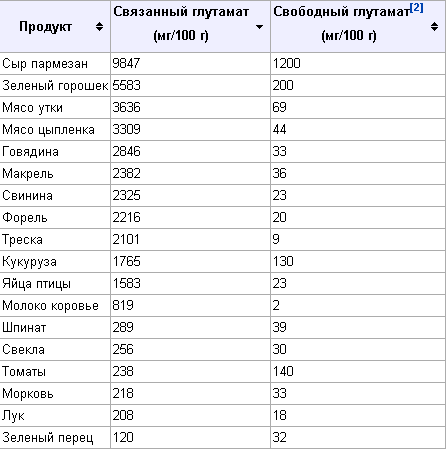
In principle, this amino acid is classified as conditionally essential. That is, when there is a deficiency of it in the body, it can be synthesized by the body itself. However, this synthesis requires certain resources from your body, which is not ideal. While a person not engaged in sports typically meets their glutamine needs through regular diet, athletes require much more glutamine. Consequently, the body is often forced to synthesize the insufficient amount of glutamic acid on its own. Moreover, glutamine also promotes the production of growth hormone and nitrogen retention in the body. It is well-known that growth and aging of the body are directly related to nitrogen balance. If it is positive (the body accumulates nitrogen), overall development occurs. If it is negative, aging takes place. Glutamine also enhances the permeability of potassium ions into muscle cells. Adequate levels of potassium in muscle fibers allow for stronger contractions during exercise. Dosage and Method of Use Take glutamine twice a day, at 5-10 grams per dose. EVERY DAY. In the morning and after lunch. If you have a workout that day, then take it in the morning and immediately after training. You can take glutamine on an ongoing basis, without breaks. Women can take 5 grams twice a day. Men should take 5-10 grams twice a day. Glutamine can be mixed with water or added to protein or gainer shakes. I especially recommend taking this amino acid in spring and autumn, when the risk of getting sick increases. Glutamine significantly boosts the immune system. Also, all the dosages mentioned above refer to pure 100% glutamine. So if you are taking a supplement with less than 100% glutamine, you must adjust your dosage accordingly to achieve the desired amount of glutamine. Overall, glutamine is a fairly useful and inexpensive amino acid. However, don’t expect miraculous results from it. Remember, everything your body needs, it can synthesize on its own. By taking glutamine as a supplement, you simply free up some of your body's resources and create a certain reserve of this amino acid within your system. Personally, I prefer to buy glutamine in powder form as it tends to be cheaper than capsules. Here are a few good options in terms of price/quality ratio: SIMILAR ARTICLES
COMMENTS |