|
»
Knee joint injuries: types, symptoms, treatment
Author: Sergey Yezhov - sports medicine physician. All articles by the author ➤
Probably everyone has experienced knee pain at least once in their life. The causes can be sharp injuries due to trauma or age-related degenerative changes in the joint tissues. This is related to the complex anatomy, as well as the increased loads experienced by the knee. In sports injury statistics, knee injuries hold a leading position. Quite often, the knee becomes the reason for the end of a professional athlete's career. 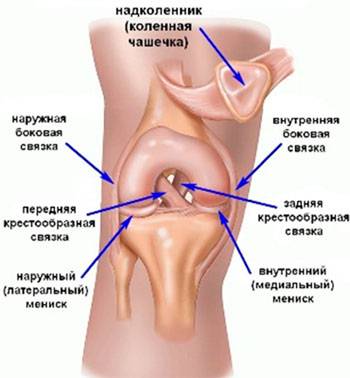
As I mentioned, the structure of the knee joint is quite specific and has a number of features. 1. In fact, the knee joint consists of two articulations: the femoro-tibial and femoro-patellar joints. Very often, after an injury, patellofemoral conflict syndrome develops. This occurs due to damage to the joint surface of the patella, which becomes uneven and rough. The patella can no longer glide properly over the surface of the thigh, causing pain during flexion and extension of the leg. 2. Inside the knee joint, there are menisci, cartilage formations that act as unique cushions. These structures can be damaged even with insignificant traumatic impact. 3. A complex ligamentous apparatus of the joint. Besides the external, extra-articular ligaments, there are two cruciate ligaments in the knee joint: the anterior and posterior. These structures also frequently sustain injuries. I. Knee Contusion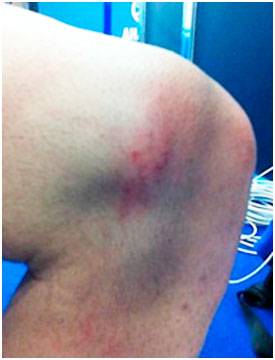
Knee contusions are one of the most common injuries. They usually occur from a direct blow or when falling on the knee. It is characterized by pain, both at rest and during leg movements, as well as swelling of the soft tissues. Sometimes a hematoma appears, which can spread to the lower leg and thigh within 2-3 days. Specific treatment is not required. Cold should be applied to the knee for 15-20 minutes with an hour break, then repeat 3-4 times during the first two days. Anti-inflammatory ointments can be used. For severe pain, analgesics are recommended. The leg should be rested for 7-10 days. During this time, the symptoms typically resolve. In cases of pronounced swelling or severe pain, it's better to consult a doctor. II. Ligament SprainsKnee sprains are also quite a common injury. Clinically, it is not much different from a contusion, meaning it is also accompanied by pain and tissue swelling. Sometimes a feeling of instability may occur, like the knee twisting when standing up. Confirmation can only be made through ultrasound results. Treatment also involves using analgesics and cold therapy. It's necessary to immobilize the leg in a knee brace for up to 10-12 days. III. Meniscus InjuriesTypically, the mechanism of injury involves twisting the leg with a fixed shin (for example, this often happens while skiing). Most often, the inner meniscus is injured because it is more tightly fused with the joint capsule. During an injury, intense pain is felt on the side of the kneecap. There may also be a "locking" symptom of the knee, where the affected person cannot bend their leg due to severe pain and the sensation of a foreign body inside the joint. Meniscus injuries are often accompanied by hemarthrosis—a collection of blood in the joint. When suspecting this injury, the leg should be promptly immobilized using a splint or bandage. You must immediately consult an orthopedic trauma specialist. The doctor will conduct the appropriate examination for a definitive diagnosis. MRI of the knee joint is most informative for confirming these injuries. Recovery in such cases takes from 1 to 2.5 months, depending on the extent of the injury and the treatment provided. IV. Ligament Ruptures of the Knee JointThis is one of the most severe knee injuries. Due to biomechanics, the anterior cruciate ligament is most often injured. When completely torn, the supportive function of the joint becomes impossible. When a person injures the cruciate ligament, they feel a dislocation and a feeling of instability in the leg. Injuries are often accompanied by severe pain and swelling. Injuries to the cruciate ligaments are diagnosed using the "drawer sign." The affected knee is bent at a right angle, and the shin is tried to be shifted back or pushed forward. If it moves forward, the individual has injured the anterior cruciate ligament; if it shifts back, the posterior cruciate ligament is affected. Treatment aims to reduce pain and swelling in the joint. Cold is applied to the injury site, analgesics are provided, and complete rest is ensured for the injured limb. Diagnosis clarification is also conducted using tomography. Partial ligament injuries are treated conservatively. In the case of a complete rupture of the ligament apparatus, reconstruction or endoprosthetics of the ligaments is performed. V. Patellar Dislocation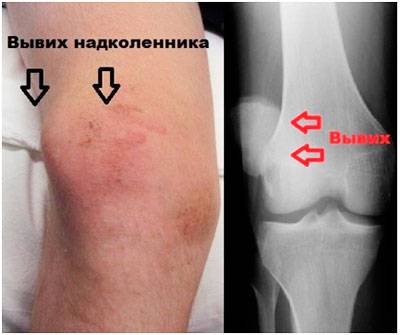
Patellar dislocations constitute 0.4-0.7% of all joint dislocation cases. The likelihood of a patellar dislocation increases with a shallow patellar groove, poorly developed external femoral condyle, and disrupted relations between the axis of the quadriceps muscle and the patellar ligaments. Typically, the cause of a patellar dislocation is a direct trauma (falling on the knee joint, lateral impact to the patellar area) combined with the contraction of the quadriceps muscle. An acute traumatic dislocation of the patella is accompanied by sharp pain. The knee joint is slightly bent, swollen, and broadened in the transverse direction (in lateral dislocations). Movement in the joint is impossible. On palpation, the dislocated patella is felt to be shifted to the side. Sometimes a traumatic dislocation of the patella can spontaneously reduce. In such cases, patients report an episode of sharp pain in the leg, accompanied by a feeling of buckling and displacement in the knee. After a spontaneously reduced dislocation, there is usually slight or moderate swelling in the knee joint area. Acute patellar dislocation is typically treated conservatively. The dislocation is reduced under local anesthesia. The limb is bent at the hip joint (to relieve the tension of the quadriceps tendons) and extended at the knee joint. Then, the patella is carefully repositioned until the dislocation is corrected, and a plaster splint or bandage is applied for up to 4 weeks. VI. Fractures of the Bones Forming the Knee JointThis type of injury typically causes intense pain syndrome, which prompts the affected individual to seek immediate medical attention. In this overview, we will not discuss such injuries, leaving that task to the professionals. Thus, we have reviewed the most common injuries in the area of the knee joint. Once again, it is worth noting that self-treatment is not always advisable. If you have doubts about the nature of your injury, if swelling in the knee area persists for an extended period or increases, and if the pain does not subside, consult a specialist. The sooner a correct diagnosis is made, the better the chances for recovery. SIMILAR ARTICLES
COMMENTS |