|
»
Knee instability in athletes
Author: Sergey Yezhov - sports medicine physician. All articles by the author ➤
For individuals who train regularly or engage in professional sports, the knee joint is a high-risk area. High speeds, sudden changes of direction, and jumping elements exert tremendous pressure on the ligamentous apparatus. If the knee begins to lose stability, it not only impairs athletic performance, but also jeopardizes the continuation of the training process. 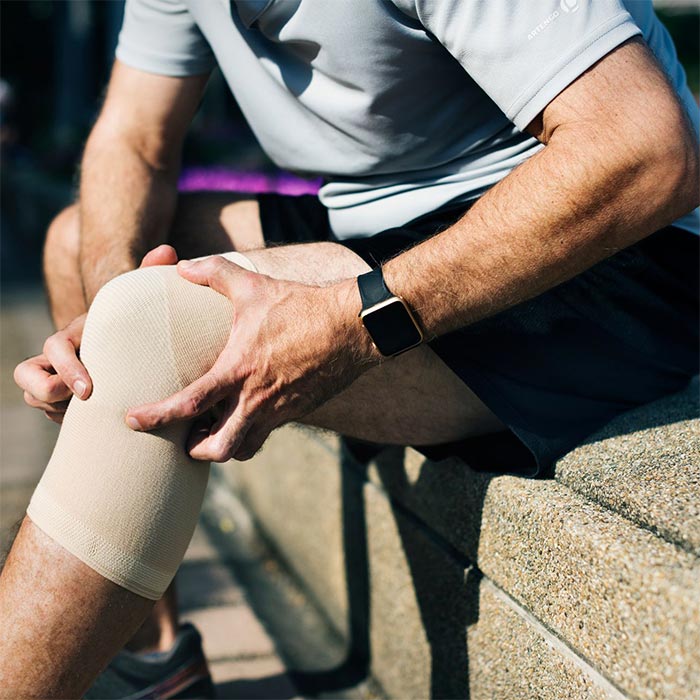
Why Are Athletes More Prone to Knee Instability?Pathological joint laxity in physically active individuals typically develops according to two scenarios: resulting from a single severe trauma or due to chronic repetitive microtrauma. Types of Stress and High-Risk SportsThe highest-risk group includes sports involving pivoting—rapid rotation of the thigh while the foot remains planted. These include soccer, basketball, volleyball, tennis, skiing, and combat sports. During jumps, hard landings, or abrupt changes of direction, the ligaments experience peak overloads. If neuromuscular control falters even slightly at that moment, the full inertial force impacts the internal joint structures, leading to sprains, overstretching, or tears. Recurrent Twisting and "Playing Through" the InjuryA very common mistake is attempting to resume athletic activity as soon as the initial acute pain subsides. An incompletely healed ligament remains elongated and weakened. The athlete continues to train, yet the joint has lost its former stability. This leads to recurrent episodes of the knee giving way, each accompanied by further microdamage. Gradually, this condition becomes chronic, and the knee may start to buckle even during routine daily activities. What Happens to the Knee If Treatment Is Delayed?Many hope that the joint will eventually adapt on its own. However, ignoring the problem and pushing through workouts triggers a dangerous chain reaction throughout the entire knee:
How to Safely Return to Training?Returning to sports must be progressive, intentional, and strictly monitored. The absence of pain alone should never be the sole criterion. Criteria for Readiness to Bear LoadBefore increasing training intensity, the knee must undergo functional testing. The joint is considered ready for athletic loads when full range of motion is restored (painless flexion and extension), there is no swelling following walking, and muscle strength in the injured leg is at least 90% of the unaffected limb. Furthermore, the patient must successfully complete specific coordination and balance tests with total confidence. Common Mistakes When Returning to SportsThe primary mistake is rushing the progression. Athletes often attempt to resume their previous training volume immediately, neglecting warm-ups and targeted corrective exercises. Another dangerous misconception is placing full trust in an elastic bandage or knee brace to protect the joint in the presence of underlying muscle deficits. External supports provide only temporary assistance; true stability must be built upon a robust muscular foundation. When Should You See an Orthopedic Specialist?A consultation with a specialist is essential after any initial knee twisting injury accompanied by a pop, click, or rapid onset of swelling. If you feel during physical activity that knee ligament instability prevents you from making sudden movements, or the joint feels as though it is slipping out of place, do not postpone medical evaluation. The doctor will perform the necessary clinical tests, evaluate the condition of cartilaginous structures, and design an appropriate rehabilitation program to help you return to your sport safely. SIMILAR ARTICLES
COMMENTS |