|
» »
Benefits of cholesterol. Top 7 facts about cholesterol
Author: Mikhail Ziborov - author of the site makefitness.pro. All articles by the author ➤
About 30 years ago, the scientific community was shouting at every corner about the dangers of cholesterol: it is supposedly the cause of atherosclerosis and generally very harmful to our health. Then it turned out that the cholesterol from food is not quite the same as the cholesterol in our bodies. Later, it became clear that dietary cholesterol is not harmful at all, but rather very beneficial and performs key tasks (and all this against the backdrop of people almost universally trying to minimize cholesterol in their diets). In short, here we have already briefly discussed cholesterol many times, and below everything is described in more detail. 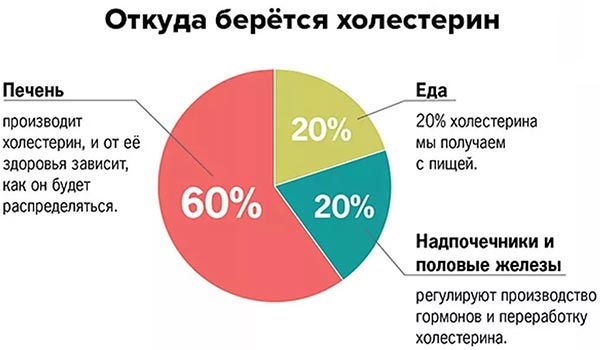
The Importance of Cholesterol for Health
Cholesterol is an alcohol substance that performs a whole series of functions in the body. And why do we need cortisol? Because it is not just a stress hormone, as everyone tends to think, but a hormone of vitality (you wake up thanks to it, as mentioned here). Do you want your body to function like clockwork? Don’t neglect cholesterol. 2. Cholesterol and Body Cells (Youth). Any cells have membranes (they hold the cell contents together, preventing them from breaking apart). A small amount of cholesterol in food = weak cell membranes (their thinning and the death of cells). Simply put, new cells are built weakly, old ones cling on for dear life, but ultimately they die under the onslaught of active oxygen species (free radicals), causing the body to age at an accelerated pace. Skin, internal organs, the nervous system, etc. age. Here’s some info for those looking to gain mass: you won’t be able to build muscle mass if you are deficient in cholesterol (building muscles means creating new cells, which have no materials to build from). 3. Cholesterol, the Brain, and the Nervous System. The brain is an electricity generator. Nerves are electric cables insulated by cholesterol. Low cholesterol? Say hello to a shaky nervous system and poor cognitive function. Interestingly, there is a correlation between cholesterol deficiency and the development of dementia (senility). 4. Cholesterol and Child Development. Breast milk is rich in cholesterol (14 mg per 100 ml). It’s no surprise that our producer has embedded such a quantity of this substance into women: children must develop well and quickly (remember the building of new cells and their membranes, as well as hormones?). Now imagine a nursing mother is not getting enough cholesterol. How will her child develop? 5. Cholesterol and Bile. Bile helps to digest fats. Notably, half of the bile (which includes cholic and chenodeoxycholic acids) is built from cholesterol. A deficiency in cholesterol = a deficiency in bile = poor digestion (heaviness in the intestines) = fats being excreted with feces. 6. Cholesterol and Vitamin D. Everyone knows that due to sunlight, we produce vitamin D in our bodies. However, few people mention that it is synthesized from cholesterol. If you are not getting enough of this valuable fatty substance, then even if you live in the sun, vitamin D will not be synthesized in the required amount (although you can, of course, take vitamin D from supplements, which don’t require sunlight). Well, as we remember, vitamin D is about calcium absorption (not only for bones and teeth but also for muscle contraction, i.e., strength), prevention of various diseases, and overall health. 7. Cholesterol and Fats. Dietary cholesterol is used to create the well-known "bad" (LDL) and "good" (HDL) cholesterol. Bad and good cholesterol are essential for the body to function (the issue is only in the amounts of each type, and if the balance between them is disturbed, problems begin). So, bad and good cholesterol are transporters of fats (they participate in metabolism). Thanks to them, fats are transported throughout the body and delivered where they are needed. Therefore, having too little or too much cholesterol in your diet is a problem with your metabolism. Cholesterol should be consumed in sufficient amounts: neither too much nor too little. And now look at how much is tied to cholesterol. And imagine that in all these areas of the body’s functioning, this substance will be lacking. It’s simply a breakdown in the body’s entire system! Food Sources of CholesterolThe simplest and most accessible sources are eggs and butter. They are among the leaders in cholesterol content. Do you have a deficiency? Focus on these products. Additional sources include poultry and animal meat. Pork has a bit more, veal is in the middle, while chicken and turkey contain the least amount. SIMILAR ARTICLES
COMMENTS |