|
» »
Which protein is better: absorption rate and amino acid composition
Author: Mikhail Ziborov - author of the site makefitness.pro.
2023-01-12 All articles by the author ➤
The importance of protein in the diet of someone who trains is known, except perhaps to the lazy. This is discussed in almost every article that can be easily found on the internet. But tell me, is all protein the same? Is it the same in meat, fish, and cottage cheese? Or is there a difference? For nuances regarding nutrition for muscle gain, weight loss, and training tricks, check out our resource on Telegram. Come in and see if you need scientifically grounded information. Amino Acid Composition of ProteinsAmino acids are the building blocks of proteins. The body breaks down any protein into amino acids, and then builds the necessary proteins (for muscles, internal organs, etc.) from them. For athletes, all 20 proteinogenic amino acids are important, meaning those that influence protein synthesis. Currently, scientists even agree that there are 22 such amino acids (with selenocysteine and pyrrolysine included; these can be used by the body), but the basis always considers the 20 main ones: alanine, cysteine, aspartic acid, asparagine, glutamic acid, glutamine, phenylalanine, glycine, histidine, isoleucine, leucine, lysine, methionine, proline, arginine, serine, threonine, valine, tryptophan, tyrosine. Each of these amino acids is found in animal-based proteins – from meat, poultry, fish, eggs, and dairy products. However, the amount of each amino acid varies in these products (some contain more or less of a particular amino acid). Compare the amino acid composition of chicken and chicken eggs (the tables do not include 2 amino acids – asparagine and glutamine, but they are present in the composition): 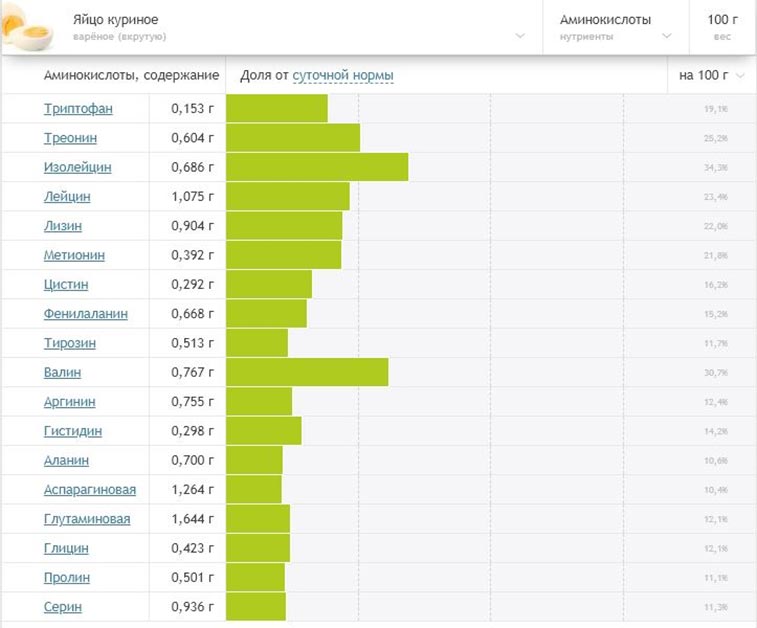
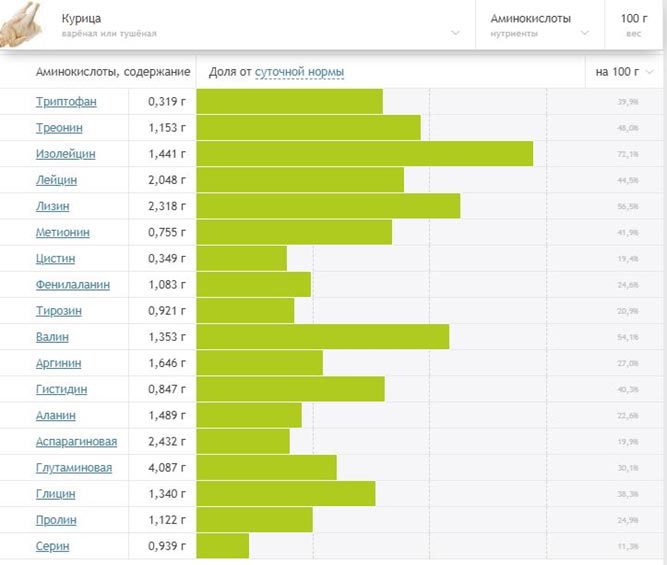
By the way, fish (salmon) also surpasses eggs in terms of the volume of almost every amino acid. The same goes for any type of meat. Particularly, heavier types of meat (pork, beef) have a higher volume of amino acids. From the graphs, we also see that in terms of the volume of amino acids per 100g of product, chicken meat exceeds chicken eggs. One might think that for athletes, meat would be the preferred choice. However, it’s not all that simple. Besides the amino acid composition and their volume, there’s also the degree of absorption from both types of protein (from meat and eggs). Protein Absorption by the BodyIn terms of the amount of amino acids (protein content), any meat is far more preferable than, for example, chicken eggs or cottage cheese (which have approximately comparable volumes). However, there is one "but." The amino acids from cottage cheese or eggs are absorbed significantly better than from any type of meat or fish. 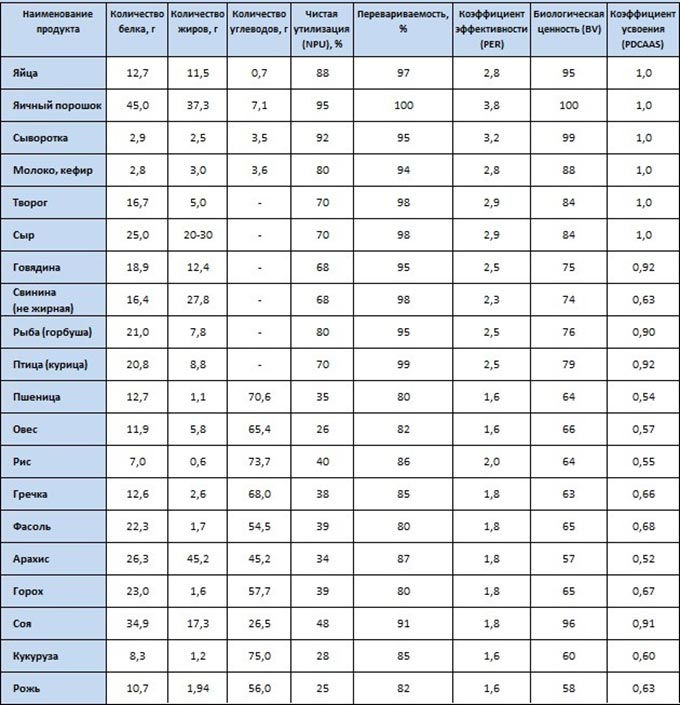
Pay attention to the first and last columns of the table: there is more protein in pork, beef, and chicken (first column), but the absorption coefficient for cottage cheese and eggs is higher. Particularly, pork, which many of us enjoy, has a lower protein absorption rate. What accounts for the higher protein absorption from eggs and dairy products? The fact is that before protein can be absorbed, the body must first reach it. To do this, it has to break through (digest) the cell membranes. These membranes are quite tough in meat. They are somewhat weaker in fish. However, in milk (cottage cheese), cheeses, and eggs – there are no cell membranes. Thus, the body, so to speak, does not spend energy and time overcoming these cell barriers. By the way, protein from eggs is considered the gold standard, the best protein source. All other types are compared to it. I’ve written about the myths surrounding chicken eggs. In fact, we have the following dietary options: - either we eat a lot of protein, but it is less efficiently absorbed; - or we eat less protein (but in sufficient quantities), and it is better absorbed. Overall, it doesn't cost you anything to eat more cottage cheese or boiled eggs to get the same amount of amino acids as from pork, for example. But again, you probably won’t want to eat only cottage cheese and eggs just because they are better absorbed. You would quickly tire of that monotony. It’s better to maintain some variety in your diet. This is not only psychologically better but also healthier (considering micronutrients and other nutrients). So today cottage cheese, tomorrow meat, the day after that eggs, and eventually we’ll get to fish. There’s also the type of protein called whey protein. The interesting thing about it is that it has a high protein content (the amino acid profile is fantastic), and it is very well absorbed. 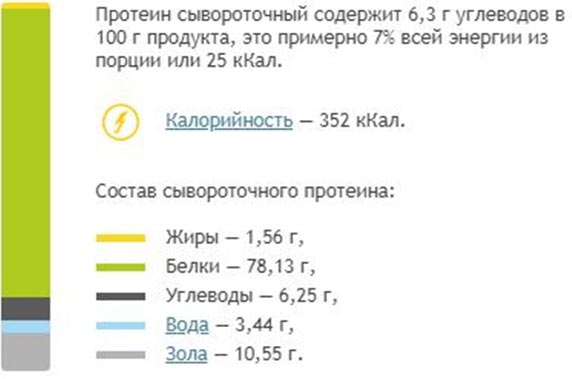
Thanks to its properties, this supplement is actively used by athletes to ensure they get enough protein when regular protein-rich foods are difficult to consume in sufficient quantities. Animal vs. Plant Proteins: Which Are BetterRegarding plant protein compared to animal protein, the former is considered incomplete due to the lower volume of each amino acid and their absorption rate. Take a look at this table: 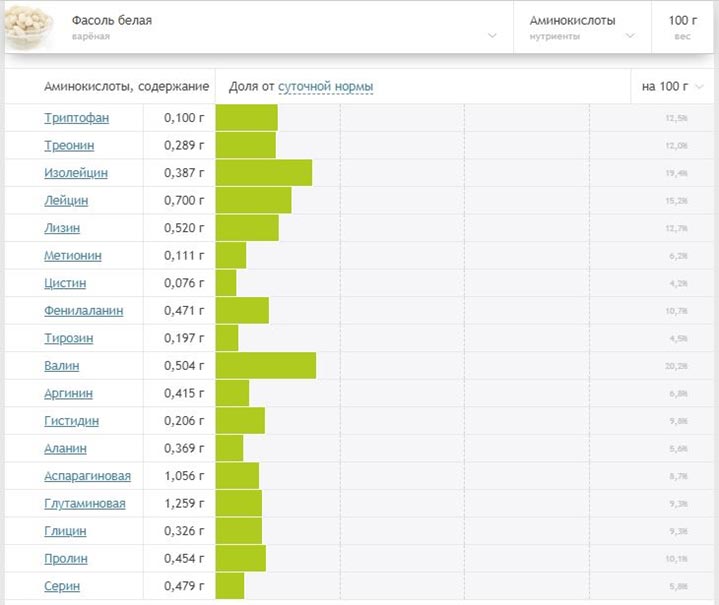
And compare the amounts with that of an egg. Each amino acid appears in much smaller amounts, and they are also absorbed less effectively (as seen in the previous table, the absorption rate is 0.68 compared to 1.0 for eggs). The same pattern is observed with any other type of plant protein, except for soy: soy has great absorption and volume, but there are other drawbacks (it should not be consumed in large quantities). In the article "Is It Possible to Gain Muscle on Plant Protein?", I mentioned that if for some reason you want to progress solely on plant protein, you will need a combination of several types of plant proteins. For more details, follow the link. And here you can find out what happens if you train but do not get enough protein from your diet. By the way, despite the fact that plant-derived protein is inferior to animal protein, you should still account for it in your diet (count it). Many people think that if the protein is incomplete, it shouldn't be considered. For a dietary plan for mass gain, complete with product selections and accompanying recommendations, visit here. For professional training programs, visit here. SIMILAR ARTICLES
COMMENTS |