|
»
Facebuilding: training neck muscles
Author: Kristina Bondareva - facebuilding coach. All articles by the author ➤
Neck training is one of the largest and most important sections in face-building. There are several reasons to incorporate a few neck exercises into your training program: 1. A trained neck is the "foundation of the face." Among my students—face-builders—about 30% are athletes, either those who train at home or visit the gym. This category of people tends to have an almost perfect facial contour, with no double chin or wrinkles on the neck. Well-trained neck muscles provide excellent support for the middle and upper parts of the face. 2. Improved well-being By training the neck, we enhance blood circulation, thereby supplying the brain with oxygen and nutrients. Good muscle tone in the neck helps improve posture. Staying in a fixed position for a long time, such as slouching in front of the computer, can lead to muscle spasms in the back and neck, resulting in headaches, decreased performance, and fatigue. 3. Increased strength and endurance Strong, trained neck muscles provide stability in the thoracic region of the spine, allowing us to increase loads in almost all other body exercises. 4. Prevention of cervical spine diseases Osteochondrosis is no longer surprising anyone. The disease is becoming more common among younger people. As a preventive measure for exacerbation periods and as part of a comprehensive treatment for this ailment, exercises for the neck help improve muscle flexibility and the mobility of the vertebrae. The muscles and fasciae of the neck have a complex structure and topography, which is due to their different origins, various functions, and relationships with the internal organs of the neck, blood vessels, and nerves. Neck muscles are divided into separate groups based on their origin and topographic features (by neck regions). Topographically, neck muscles are divided into superficial and deep muscles. Let's Move on to Neck Flexibility ExercisesThese exercises belong to the section of therapeutic physical training (LFC) for the neck area. Attention!!! Exercises No. 2, No. 4, and No. 5 are primarily recommended for chronic diseases of the cervical spine, but can also be used cautiously in acute conditions after reducing pain sensitivity. These exercises not only improve the flexibility of the cervical spine but also stretch the "tight" large muscles of the posterior neck area. All exercises are performed with a 3-second hold for 10 repetitions. Exercise No. 1 Shoulder Shrugs 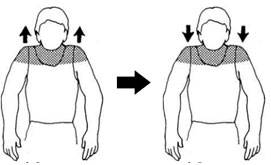
Move your shoulders up and down, then forward and backward. Repeat 10 times. 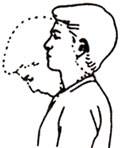
Exercise No. 2 Neck Flexion Bend your head down and return to the starting position. 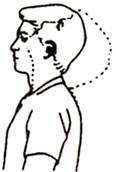
Exercise No. 3 Neck Extension Tilt your head back and return to the starting position. 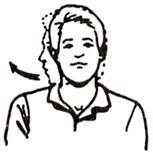
Exercise No. 4 Neck Rotations Slowly turn your neck left to see your left shoulder. Then do the same to the right. 
Exercise No. 5 Neck Retraction Tilt your head back while keeping your eye and jaw level. 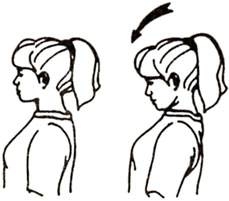
Exercise No. 6 Neck Flexion and Extension Gently flex and extend your neck, making nodding motions. 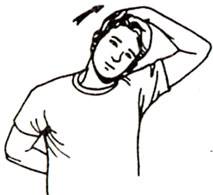
Exercise No. 7 Stretching the Trapezius Muscle Using one hand, tilt your head to the side. The other hand should be placed behind your back. 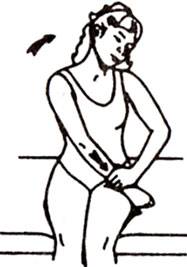
Exercise No. 8 Neck Stretch Hold your extended arm down at the wrist with the opposite hand. Gently turn your head towards the holding hand. Exercises for Strengthening Neck MusclesAll exercises are performed with a 3-second hold for 10 repetitions. 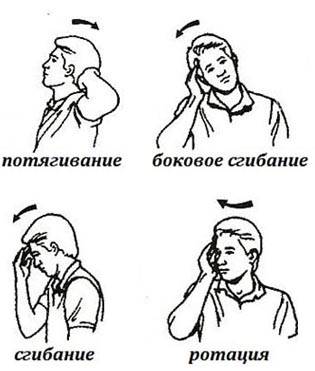
Exercise No. 9 Pulling Place your hands on the back of your head. Tilt your head backward while providing resistance with your hands. Exercise No. 10 Lateral Flexion Support your head from the side with your hand. Tilt your head to the side, providing resistance with your hand. Exercise No. 11 Flexion Hold your forehead with your fingertips. Tilt your head forward while resisting with your hands. Exercise No. 12 Rotation Place your fingertips on your temple. Turn your head, trying to see your shoulder. Provide resistance with your hand. When training the neck muscles, caution is essential! Choose exercises based on your feelings. These exercises serve as prevention for diseases of the cervical spine. P.S. I develop individual programs for face-building training and conduct classes via Skype. If you are interested – here you go. SIMILAR ARTICLES
COMMENTS |