|
» »
Top 10 exotic and unconventional strength exercises for the whole body
Author: Mikhail Ziborov - author of the site makefitness.pro. All articles by the author ➤
At the time of writing this material, a complex gymnastics element was named after the Rostov gymnast. The triple back somersault is now called the "Nagorny element." He was the first to perform it. Similarly, the exercises mentioned below follow this naming convention. We don’t have our own named exercise, but we do have a Telegram, where we share something useful daily. You receive information, collected over years, 30 times a month. Below are alternative exercises for almost the entire body. However, your results depend not on the exercises you use but on the training program built from them. If your program is on point, you can play around with various exercises for diversity or to better work on your own body. And if you’re particularly unconventional, I suggest you create your own training program. 1. Hatfield SquatsOr Hetfield Squats (also known as squats with a safety bar). The technique of this movement is almost indistinguishable from the familiar barbell squats. However, the barbell itself is different. It has this construction: 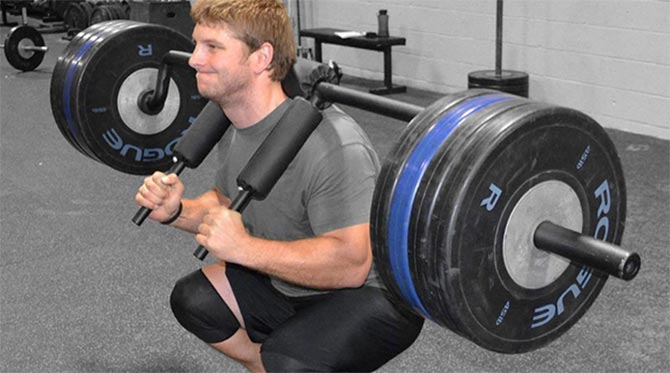
The barbell has several advantages over a conventional straight barbell, despite weighing 40 kg:
- The center of gravity is shifted (reducing the load on the shoulder girdle); 2. Jefferson Squats (Saddle Squats)These are squats with a barbell positioned between the legs. You could say it's similar to a deadlift with a barbell between the legs, but that's not the point. 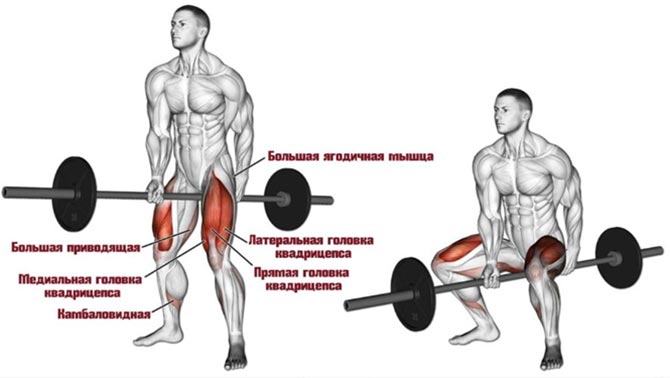
The main advantages are:
- The quadriceps bear the most load, making them stronger and larger; Note! Before lifting moderate and heavy weights, it's best to ensure your core muscles are strong and practice the exercise technique with lighter weights. Because of the slightly rotated position of the torso, the risk of injury increases. The Jefferson exercise can be performed with free weights or on a Smith machine. 3. Gakenschmidt Squats with a BarbellAlso known as Squats with a barbell on the shoulders behind the back or Gakken Squats with a barbell on the shoulders. Please do not confuse this with hack squats in a machine. This movement can also be referred to as a deadlift behind the back. The distinctive feature of the exercise is the placement of the barbell behind: 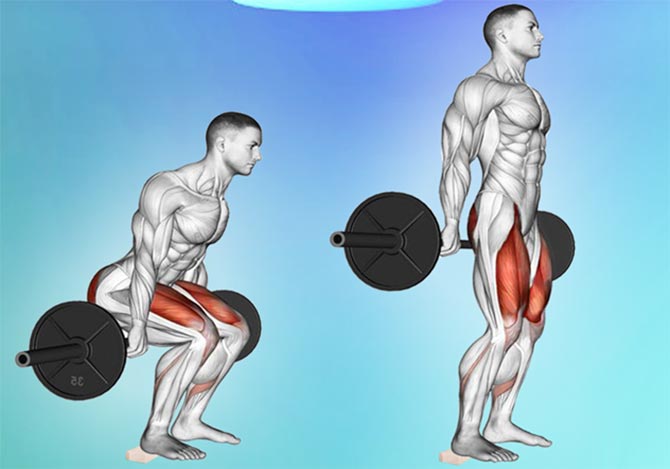
The main advantages include: Mandatory reading! Learn the technique only with light weights. The movement requires flexibility in the hip and shoulder joints; pay attention to stretching if it prevents you from performing this exercise perfectly. 4. Zercher SquatsAlso known as Zercher Squats or even Zergers. This exercise is quite similar to front squats. However, it's not the same. The distinctive feature lies in the manner of holding the equipment: 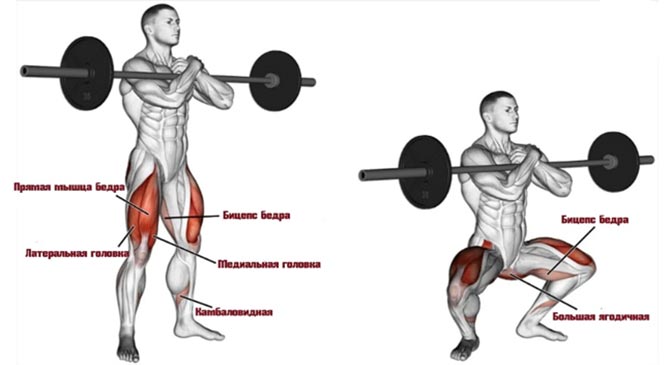
Key advantages:
- Engages more of the hamstring and abdominals; Special notes. Like other alternative exercises, start with lighter weights. To prevent the bar from pressing down on your arms, use a fitness mat or other padding. Also, keep in mind that the load on the knees increases due to holding the weight in front of you. 5. Spider CurlsThis exercise targets the arm muscles – biceps (brachii), brachialis (upper arm), and brachioradialis (forearm). The distinctive feature is the forward-leaning torso and the stretching of the arm muscles: 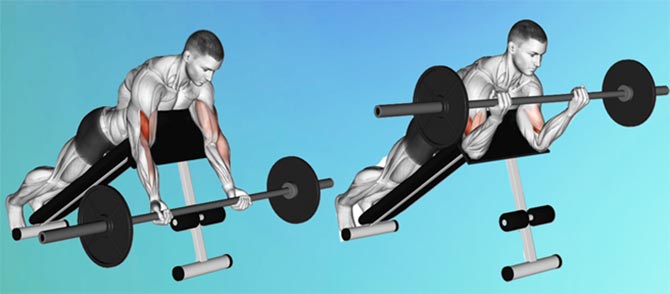
The exercise can be performed on a regular incline bench or on a Scott bench. The only difference is the torso angle. You can use a barbell or dumbbells. Key advantages include:
- Exercise performed from a stretched muscle position (leads to greater growth); 6. Zottman CurlsThis is also an arm exercise but focuses not only on the biceps but also the brachialis (located under the biceps). The distinction from other exercises targeting these muscle groups is that the biceps receive concentric overload (when curling the arms), while the brachialis receives eccentric overload (when lowering the weight). I assure you, both phases of movement affect muscle growth, with the eccentric phase having even a bit more impact. In short, the Zottman exercise allows for parallel development of both biceps and brachialis muscles. Moreover, it saves time: previously you would do 3-4 sets for the biceps and then the same for the brachialis, but now you’ll spend half the time working on both. 7. Dumbbell Press Standing Against the WallThis is the familiar military press, but with a wall. Your task is to press your back, buttocks, and heels against the wall, and lift dumbbells so that they touch the wall (sliding along it). The challenge is that with this position of the weights, the elbows will face strictly to the sides. Because of this, the load shifts from the front deltoids to the middle and rear. That is, these muscle portions receive approximately equal loading, unlike before. Warning. Use a lighter weight than what you’re accustomed to pressing in this exercise. Initially, it will feel unusual, but you will definitely feel your deltoids working. 8. Swenda PressThis involves extending the arms in front of the chest with weights. I have discussed it in detail in the article “Unconventional Exercises for the Chest,” including various methods of execution. In brief:
- Clearly targets the chest (including the inner portion); 9. Tate PressThis exercise uses dumbbells to work on the triceps (triceps brachii): 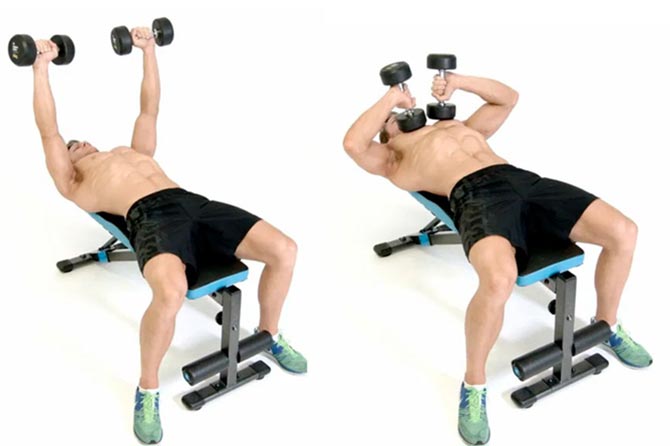
Advantages of this exercise:
- Engages the triceps (both lateral and medial heads); 10. Lee Haney’s RowThis is a unique shrug (shoulder lift) with a barbell. However, the barbell is positioned behind the back, and the elbow joints are more engaged. It can be performed on a Smith machine and with hammer strength machines. 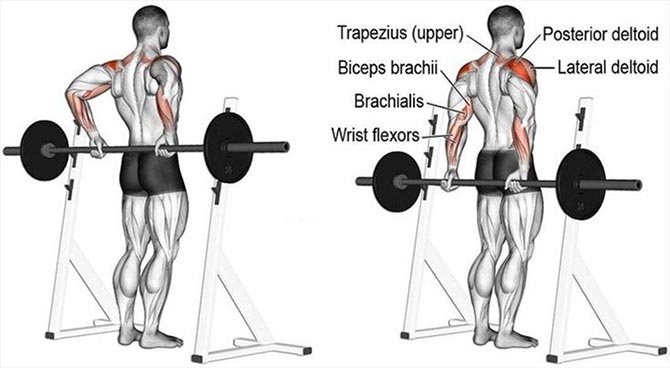
The advantage of this movement lies in the fact that it engages many muscles (trapezius, biceps, round muscles, rhomboids, rear deltoids, infraspinatus, supraspinatus, and forearm muscles). Thus, unlike the familiar shrugs, this exercise is a compound movement that provides an advantage for muscle mass growth and strength metrics. Recommendations. Don’t lift only with the trapezius without bending your elbows; otherwise, it's just a shrug. Don’t round your back or excessively arch your lower back. Your elbows should be pointing toward the ceiling when lifting the weight. For those interested in more exercises, you can find them here. SIMILAR ARTICLES
COMMENTS |